With a background in Development Studies, Candace has worked with an international non-profit, gaining experience in programme management and leading education initiatives that drive social impact.
In partnership with the Memorandum of understanding on Port State Control for West and Central African Region (Abuja MoU)
This page is approximately a 3 minute read
This page was published on
This project's duration was 5 years 2 months
£746,847.64
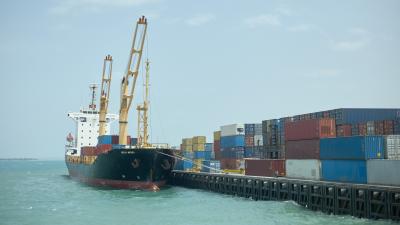
The Strengthening Port State Control in West and Central Africa project is led by the Memorandum of Understanding on Port State Control for West and Central African Region (Abuja MoU) supported by Lloyd’s Register Foundation.
The waters of the Gulf of Guinea are vital to global trade and livelihoods of coastal communities, yet maritime safety and related oversights including seafarer’s welfare and safety, marine ecosystems and regional economies are endangered by poorly regulated shipping. These challenges were common across all regions and attracted the attention of the International Maritime Organization (IMO), which subsequently developed Resolution A.682(17) of 1991 on Regional Co-operation in the Control of Ships and Discharges to specifically address them.
The Resolution covers a broad range of issues, including the promotion of regional cooperation, harmonization of Port State Control procedures, strengthening compliance with IMO conventions, recognition of Flag State responsibilities, development of regional Memoranda of Understanding (MoUs), prevention of marine pollution, and other related measures aimed at enhancing maritime safety and environmental protection.
In the spirit of Resolution A.682(17) of 1991, the West and Central African States signed the Memorandum of Understanding on Port State Control for West and Central African Region (Abuja MoU) in 1999 to address the issues identified in the Resolution and to harmonise Port State Control (PSC) activities, while enhancing compliance with international maritime conventions across the region.
However, despite progress made under the Abuja MoU framework, implementation gaps, inconsistent inspection capacity, uneven regulatory alignment, and governance challenges continue to limit the effectiveness of PSC across the region. The lack of effective and comprehensive oversight largely attributable to inadequate inspection coverage, inconsistent capacity and competence among PSC inspectors, gaps in the ratification, domestication and enforcement of international conventions, and broader governance challenges.
This project aims to address these issues / deficiencies by transforming Port State Control (PSC) in West and Central Africa from a fragmented system, characterized by uneven levels of inspectors’ training and field experience i into a cohesive, well-trained, knowledgeable, transparent, and effective regional framework.
Key activities for the project include:
For too long, PSC in Central and West Africa has been characterised by a knowledge gap in the implementation and enforcement of relevant conventions and the understanding of international best practices. By ensuring that ships calling at the region’s ports comply with internationally recognised safety, environmental, and labour standards, we can build resilient marine supply chains, create safe and sustainable jobs, and support local ocean economies. Achieving these objectives, however, depends on the availability of well-trained, knowledgeable, competent, and ethically grounded Port State Control Inspectors whose conduct and professional standards align with internationally accepted practices.”
Captain Sunday Umoren Secretary General of Abuja MoU
Discovering Safety joins forces with Safetytech Accelerator to build a Smarter Regulation Sandbox.
With funding from Lloyd's Register Foundation, Moi University has launched a groundbreaking new project to advance skills training for safer engineering.
Discovering Safety and Safetytech Accelerator have been awarded Government funding for new project ‘Enabling Innovation in Industrial SafetyTECH’.