Alone together: The hidden consensus on climate change
This page is approximately a 3 minute read
This page was published on
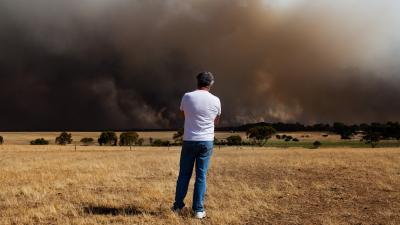
Global concerns about climate change are at record highs. But even when more people than ever see climate change as a threat to their nation, climate action is held back when people underestimate their fellow citizens' level of concern.
In the first 2026 World Risk Poll report, we explore public perceptions of the threat of climate change - perceptions that are shaped by people’s lived experience of risk in their daily lives as much by scientific evidence. They are also influenced by how people believe others in their country perceive the threat, a second-order perception that has up until now been largely absent from international climate research. This new line of enquiry in the 2026 Poll, developed with the Human Development Report Office of the United Nations Development Programme, fills this data gap. Its presence in this edition addresses a question that may matter as much for the climate crisis as the state of public opinion itself.
We hope that this report, along with the data it presents, empowers policymakers, communicators, businesses, civil society organisations and researchers to shape and target the policies, interventions and public conversations that effective climate action requires. By identifying communities and contexts where action could matter most, we aim to provide a strong foundation for the collaborations in which meaningful change can be realised.
Download the report*
Key findings
- Global awareness of the seriousness of the threat posed by climate change is rising, as three quarters (75%) of people worldwide consider it at least a 'somewhat serious' threat.
- This heightened awareness reflects an increased experience of harm from severe weather events (up 3 percentage points from 2021 to 18% in 2026), and the success of climate communication in linking these events to climate change. The increased level of concern is being driven largely by middle-income countries
- People in high-income countries who are the most intensely concerned about the threat of climate change have dropped from 54% in 2021 to 49% in 2025. However, those who see it as a 'very serious' threat are still around half the population - and yet only one in five (20%) believe their fellow citizens fell the same. This gap means climate-concerned majorities mistakenly believe they are minorities, leading to self-censorship and assertive climate action being held back.
Perceived threat of climate change, 2019-2025 (global %)
Countries with the largest gaps between personal and perceived societal concern of climate change
Portugal and the United States lead the list, each underestimating societal concern by more than 40 percentage points.
Percentage Gaps: Portugal (+42%), USA (+41%), Italy (+38%), UK (+38%), Uruguay (+37%), Spain (+36%), Argentina (+36%), France (+35%), Germany (+34%), Chile (+33%)
Poll Question (X-Axis): Do you think that climate change is a very serious threat, a somewhat serious threat, or not a threat at all to the people in this country in the next 20 years?
Poll Question (Y-Axis): Now thinking about MOST OTHER people in this country, if you had to guess, do you think MOST PEOPLE in your country view climate change as a very serious threat, a somewhat serious threat, or not a threat at all to people in this country in the next 20 years?
Download the report

World Risk Poll Report 2026 - Alone together: The hidden consensus on climate change
The first World Risk Poll 2026 report explores global attitudes to the threat posed by climate change
Download World Risk Poll Report 2026 - Alone together: The hidden consensus on climate change (PDF, 7.52MB)Citation
If you wish to use and reference the World Risk Poll 2026 Report Alone together: The hidden consensus on climate change in your own work, please include the following DOI: https://doi.org/10.60743/d5zy-ec79
Example Citation in IEEE Style:
Lloyd's Register Foundation. (2026). World Risk Poll 2026 Report. Alone together: The hidden consensus on climate change. Lloyd's Register Foundation. https://doi.org/10.60743/d5zy-ec79
* The ‘Alone together: The hidden consensus on climate change’ and ‘The quiet hazards: How everyday risk shapes daily life’ reports, along with the World Risk Poll data file and 2026 China country snapshots were updated on 2 September 2026 to reflect a minor correction affecting a subsample in China. The impact of this data change is minor and does not affect any report findings, but we recommend using the updated reports and data file for any World Risk Poll analysis or related work. The previous data file has been removed for clarity.
Evidence Library
Explore other publications from the Global Safety Evidence Centre.
World Risk Poll Data
Explore the full dataset that underlies this report, including specific data for every country included in the World Risk Poll.
Discover country-level insights