

Rewriting Women into Maritime makes London International Shipping Week debut
Rewriting Women into Maritime makes London International Shipping Week debut.
This page is approximately a 5 minute read

In Faversham, history and heritage are all around. It’s in the names on old signage, the vessels on the creek, the crafts that survive in local workshops, and the songs still sung by people who know this place inside out.
But the landscape is changing. And along the Medway and Swale estuaries, this is a matter of future safety and security. Over the next 100 years, approximately 18,000 properties, more than 10,000 hectares of agricultural land, and important infrastructure in the area will be at greater risk of tidal flooding.1
Cecilia Hammond, a Faversham resident and member of the women’s sea shanty group Upping The Shanty, has already seen the landscape changes over a lifetime.
“I’ve seen a big change along the creek,” she says. “There were huge boats being built here when I was young, but if you look, there’s just a narrow channel through the middle now.”
“The creek used to be full of sailing craft, commercial craft, smacks, and fishermen,” adds Colin Frake, a local blockmaker. “There was a shipyard and all manner of activities around the creek.”
The Coasts in Mind project, delivered by Museum of London Archaeology and supported by the Lloyd’s Register Foundation Heritage Centre, aims to place local knowledge at the heart of coastal management conversations. Communities hold vital memory and evidence, not just in official records, maps or datasets, but in personal photographs, stories, songs, and experiences.
Running from 2024 to 2027, the project is mapping 100 years of coastal change with community knowledge. It is creating a geospatial community archive that brings together material from local people, institutions and Lloyd’s Register Foundation’s own archive resources.
For Harry Farmer, an archaeologist and Project Officer with Coasts in Mind, Faversham is a place where history is often understood through its earliest records and most famous associations.
“Everyone knows Faversham as this historically significant town,” he says. “The Domesday Book, 11th-century, Medieval Cinque Port. But it’s the more recent history that I find so compelling: fleets of iconic Thames sailing barges, shipbuilding, and all these different industries lying in the creek. And, if you look close enough, they’re still alive within the continuing tradition of maritime and heritage crafts.”
This is where Upping The Shanty comes in: bringing local women together to sing sea shanties. Their involvement in Coasts in Mind has opened another layer of creative response. Through archive workshops, conversations with local knowledge holders and engagement with historical material, they are using documents and memories to inform new lyrics about the coast, the creek and the changes people are living through.
“What we do is take a shanty and then we change the words a bit to ensure that we’re singing from a woman’s point of view,” says Christine Adams, a local resident and member of Upping The Shanty. “With our involvement in the Coasts in Mind project, we’ve also started writing some of our own songs.”
In this process, a document held in an archive becomes a prompt for a song. A memory shared in a workshop becomes part of a public performance. A local concern about coastal change becomes something people can gather around, talk about and pass on.
“It’s our heritage, isn’t it?” Cecilia says. “We’ve got to pass things on. They’ve got to know what this town was like. If we don’t do things like this, it’ll be gone forever.”
That is the heart of the project. Data matters. So do models, maps and technical records. But the way people experience change also matters. A creek becoming narrower. A trade disappearing. A craft surviving in one person’s workshop. A song rewritten by women who know the town from the inside. These are different kinds of knowledge, but they can all help communities recognise risk and imagine their response.
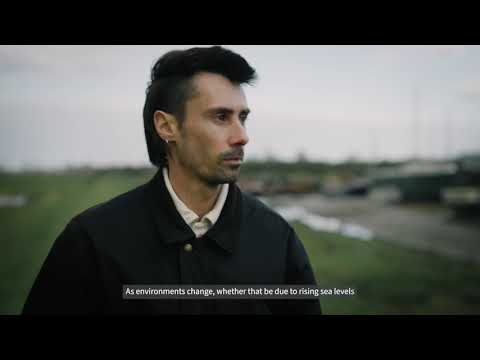
“As environments change,” says Harry, “whether that be due to rising sea levels, increasing extreme weather events, or new development, scientific modelling and datasets, when accompanied by things like memory, personal experiences of place, and perceptions of these changes, can really bolster our adaptability for the future.”
The project’s activities reflect that broad understanding of evidence. Coasts in Mind includes oral history interviews, memory workshops and walks, creative workshops with community groups, training for young people in archival and foreshore research, and paid placements for young people outside work and education. It is also developing a digital mapping platform where community-held records can be gathered, shared and used.
Dr Paul Montgomery, a community archaeologist at Museum of London Archaeology, sees that link between preservation and planning clearly.
“Many of the towns in this region have started to become aware that one of the most important aspects of their future will be aspects of preserving their heritage,” he says. “Only by understanding the changes that are going to come to this landscape and the changes that are happening can we plan and use their landscapes effectively.”
For Lloyd’s Register Foundation, Coasts in Mind reflects a wider belief that the past can help improve safety in the future. Through its Heritage Centre, the Foundation supports work that connects maritime history with public understanding, evidence and learning. In Faversham, that support is helping local people gather, interpret and share the knowledge held in their own community.
The result is an archive that can be sung, walked, remembered, mapped and used. It makes space for older residents, young people, craftspeople, archaeologists, local groups and policymakers to see coastal change from more than one angle.
Coasts in Mind shows that heritage is not only about looking back. In the hands of communities, it can become a way of preparing for what lies ahead.
As environments change, whether that be due to rising sea levels, increasing extreme weather events, or new development, scientific modelling and datasets, when accompanied by things like memory, personal experiences of place, and perceptions of these changes, can really bolster our adaptability for the future.
Harry Farmer Archaeologist and Project Officer with Coasts in Mind
Rewriting Women into Maritime makes London International Shipping Week debut.
After its launch at last year’s London International Shipping Week, our SHE_SEES exhibition is opening at the Portsmouth Historic Dockyard.
In this podcast, Lloyd's Register Foundation‘s Louise Sanger and Benjamin Ferrari discuss the catastrophic impact polluting wrecks are having on our oceans.