

Rewriting Women into Maritime makes London International Shipping Week debut
Rewriting Women into Maritime makes London International Shipping Week debut.
This page is approximately a 5 minute read
Around Fiji’s islands, the ocean holds stories.
Some are carried in traditional knowledge. Some live in the memory of families who fish, travel and work on the water. Others lie beneath the surface, in the traces of voyages, trade, shipwrecks and settlements that connect Fiji to a much wider Pacific history.
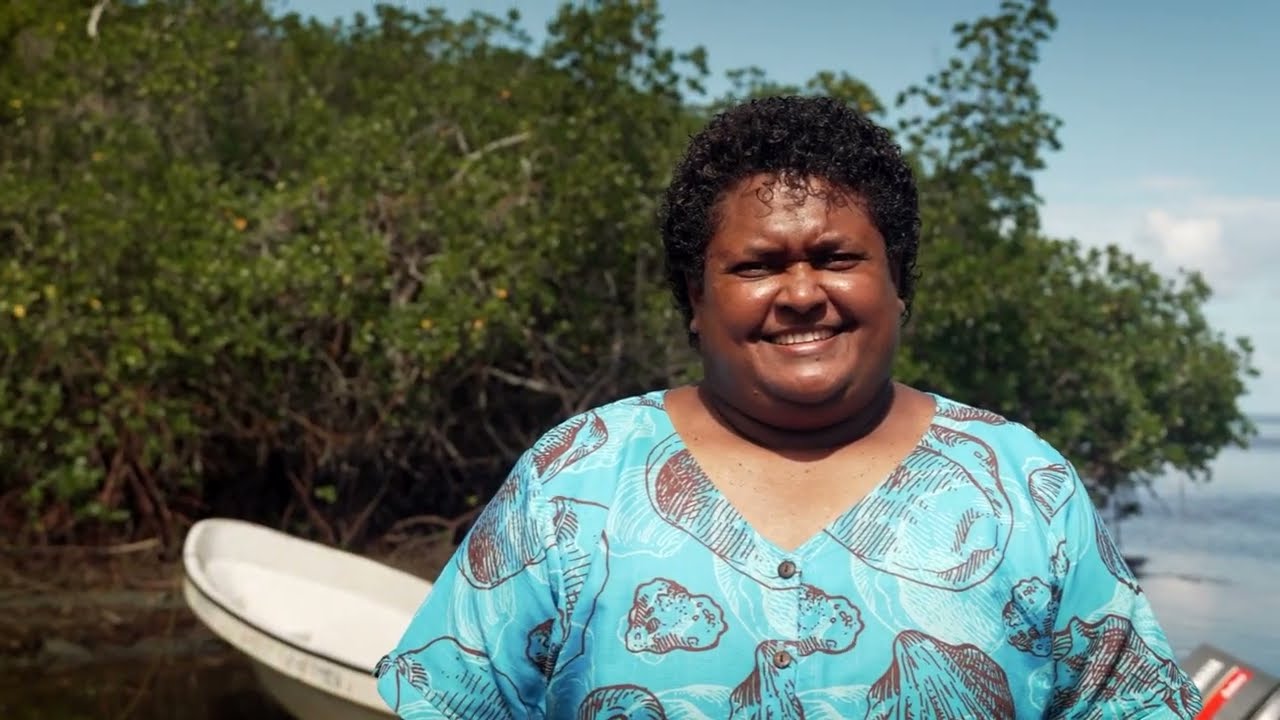
For Ms. Mereoni Camailakeba, Manager of Archaeology Services at the Fiji Museum, these underwater sites are part of who people are.
Her interest in the sea began long before her professional life. She grew up in a family that went out fishing, developing an early connection to the ocean and the knowledge it carries. “I’ve always been drawn to the sea,” she says. “Since I was young, I’ve been brought up with a family that goes out fishing.”
That personal connection now shapes her work. At the Fiji Museum, Mereoni helps document and protect maritime heritage, including sacred and cultural sites beneath the water. She knows that there are still many stories waiting to be found, understood and protected, and that underwater archaeology can help bring them to light.
“With underwater archaeology, being part of the work that we do just gives us more interest in trying to map out these sites and letting the people know that there are sacred sites underwater and not only on land,” she says.
Fiji’s underwater heritage is extensive. The Fiji Museum manages a site register of shipwrecks, with around 300+ recorded in the register, according to Mr. Elia Nakoro, former manager at the Fiji Museum. One of the best-known is the Syria wreck, which ran aground in 1884 with 497 passengers on board.
The register is only part of the picture. There are also records of early traditional double-hull canoes submerged in parts of Bau and Rewa, pointing to deeper histories of movement, skill and ocean knowledge.
“When we uncover these sites, we are not just finding objects,” Elia says. “We are revealing knowledge and ways of navigating, living with the ocean and understanding changes.”
That pressure is already being felt. Approximately 75% of Fiji’s population lives along the coast,1 leaving communities exposed to rising sea levels, coastal erosion and saltwater intrusion. Sea level rise is the leading driver of community relocation in Fiji, followed by coastal flooding and intense cyclones. For many communities, relocation is a last resort, carrying emotional and cultural weight as well as practical disruption.
In that context, preserving maritime heritage becomes part of resilience. If places change and some communities are forced to move, culture, memory and knowledge still need to be protected. Heritage can help people understand where they come from, even as they make difficult decisions about where and how to live in the future.
“Heritage is not only about the past,” Mereoni says. “It is a form of evidence that can guide how we respond to the future.”
Mereoni’s perspective has been strengthened through the Oceania Maritime Museum Administrators Course, part of the Global Maritime Histories programme. Funded by Lloyd’s Register Foundation and delivered through the International Congress of Maritime Museums (ICMM), the wider programme supports maritime museums and heritage organisations to connect local histories with contemporary challenges. It aims to build capacity, strengthen international networks and help local voices contribute to global conversations about maritime safety, sustainability and ocean stewardship.
The Oceania course brought together museum professionals from across the Pacific, including Samoa, Tonga, Guam, New Caledonia, Kiribati and Fiji. For Mereoni, that gathering created a rare opportunity to compare experiences across island nations and learn from others facing related challenges.
“With this course, we were able to gather people from the Pacific Islands,” she says, “getting to see the vast areas that we all work in.”
Many Pacific institutions face constraints around technology, resources and capacity. The course created space to explore how modern tools can be combined with traditional knowledge and practices, rather than replacing them.
“Most of us do not have the luxury of technology,” Mereoni says. “With the use of these types of courses, we are able to venture out and see how we can embed technology with traditional knowledge and traditional practices.”
At the Fiji Museum, this learning is helping shape future plans. The team is exploring new technologies, improving how underwater heritage is documented, and strengthening approaches to protection.
Their work also recognises different kinds of knowledge. Scientific investigation can help map, record and conserve sites. Indigenous knowledge and community memory can help explain why they matter, how they connect to people, and what responsibilities come with them. Together, they create a fuller understanding of maritime heritage than either could alone.
For Lloyd’s Register Foundation, the Global Maritime Histories programme reflects this belief that learning from the past can help address the maritime challenges of the present and future. Through its partnership with ICMM, the Foundation is supporting maritime museums to research, preserve and share stories that may otherwise be overlooked, especially from underrepresented communities and regions.
In Fiji, that support is helping strengthen the skills and networks needed to care for underwater heritage. It is also helping place Pacific voices within a wider global conversation about maritime history, climate change, safety and resilience.
For Mereoni, the course enabled her to “think out loud”, see new opportunities and bring ideas back to her workplace and communities.
“For many communities, the coastline is changing,” she says. “Some may have to move, but culture, memory and knowledge can still remain.”
Underwater archaeology uncovers what lies beneath the water: journeys, losses, skills, sacred places and ways of living with the ocean that still have meaning today.
When these stories are brought to the surface, they help future generations understand more than what happened before them. They help them understand who they are, what they have inherited, and how they might move forward in a changing world.
Heritage is not only about the past, it is a form of evidence that can guide how we respond to the future.
Mereoni Camailakeba Manager of Archaeology Services at the Fiji Museum
Rewriting Women into Maritime makes London International Shipping Week debut.
After its launch at last year’s London International Shipping Week, our SHE_SEES exhibition is opening at the Portsmouth Historic Dockyard.
In this podcast, Lloyd's Register Foundation‘s Louise Sanger and Benjamin Ferrari discuss the catastrophic impact polluting wrecks are having on our oceans.