A new international project funded by Lloyd’s Register Foundation is bringing together designers, engineers, industry and educators to rethink ship design for a zero‑emission future -starting with people, not just technology.
Led by the Oslo School of Architecture and Design (AHO), the OpenDesign project focuses on a key challenge in maritime decarbonisation: making sure new technologies, such as hydrogen, are designed and used safely in real‑world operations by embedding people and safety‑focused thinking from the earliest design stages.
Olivia Swift, Head of Maritime at Lloyd’s Register Foundation, said: “Decarbonising shipping isn’t only a technical challenge, it’s a design and safety challenge. This project puts people, decision‑making and operational realities at the centre of how new technologies are introduced.”
OpenDesign held its first Steering Group meeting on 1 April 2026, bringing together partners from academia, industry and professional bodies to shape the project’s direction and early design activity. Participants included the University of Strathclyde, the Royal Institution of Naval Architects, Institut Teknologi Sepuluh Nopember (Indonesia), Lloyd’s Register, DeepBlue, Ecomar Propulsion and the research team at Ocean Industries Concept Lab at AHO.
The project’s first design case will explore how hydrogen can be integrated into ship design in ways that properly reflect human judgement, operational realities and safety considerations. Partners highlighted the importance of giving designers time and structure to explore challenges visually and collaboratively, beginning with simple design approaches before moving into more complex modelling.
“By starting with people and how ships are actually designed and used, we can surface risks earlier and make better decisions,” said Kjetil Nordby, professor and head of Ocean Industries Concept Lab at The Oslo School of Architecture and Design. “That’s essential if zero‑emission technologies are to be adopted safely and confidently.”
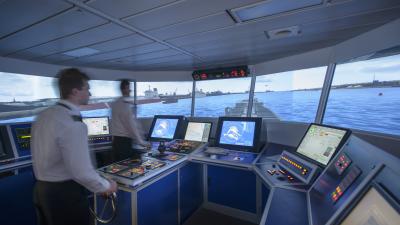
The OpenDesign research project builds on the OpenBridge design system, developed by the Ocean Industries Concept Lab at AHO. OpenBridge is an open-source design system that provides a shared foundation for the project's design work and supports broader uptake of its results across the maritime industry. In turn, outputs from OpenDesign will contribute to expanding the OpenBridge design system and its open-source resources targeted for the design of zero-emission ships.
Alongside design case studies, OpenDesign will develop an open‑source education package to support students and early‑career designers in applying people‑centred, risk‑informed design approaches across different ship types and decarbonisation technologies.