
New technologies to improve health and safety performance
Discovering Safety joins forces with Safetytech Accelerator to build a Smarter Regulation Sandbox.
This page is approximately a 3 minute read
This page was published on
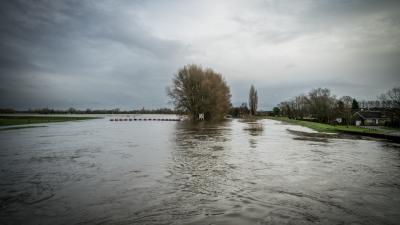
A systematic review of 111 studies across 54 countries, published by the Lloyd’s Register Foundation Global Safety Evidence Centre, finds that at least an hour’s flood warning can help households limit damage to their property when they know what steps to take.
The review’s publication comes as world leaders gather in Antalya, Turkey for COP31, with action to increase resilience in the face of severe weather connected to climate change high on the agenda. The Centre’s systematic review into the effectiveness of disaster early warnings systems found the clearest evidence of reduced property and household losses in studies of flood warnings. Findings for other hazards including cyclones and typhoons were more mixed, as was evidence for reduced deaths and injuries.
How warnings are shared affects who can act on them. Phone access, connectivity and language can all affect whether someone receives and understands an alert in time. The review recommends combining official alerts with channels such as local radio, sirens and trusted community networks, and giving clear instructions in local languages and accessible formats. It also found that systems that paired alerts with preparedness training and evacuation planning were more likely to help people take protective action. This backs up findings from the World Risk Poll, published in October, that found issuing warnings via three different channels significantly increased the likelihood of action, as did households having a disaster plan in place and a belief that they could do something to protect themselves.
Across the range of hazards and income settings covered by the economic evaluations included in the systematic review, the benefits of early warning systems outweighed their costs. The review recommends sustained funding for forecasting, warning delivery and local preparedness.
Dr Elizabeth Kumah, Review and Synthesis Lead at the Lloyd’s Register Foundation Global Safety Evidence Centre and lead author of the review, said:
“Communities value warnings that give them enough time to prepare, evacuate, protect belongings or check on others.
“Working with communities before a disaster can make that time more useful. That means agreeing how warnings will reach people, making the advice clear and accessible, and planning what help people may need to respond. As governments discuss climate adaptation at COP31, the review provides evidence to guide investment in those practical measures alongside forecasting.”
Gavin White, Lead for Strategic Engagement and Systems Transformation at the Risk-informed Early Action Partnership (REAP), commented:
“The early warnings evidence review is a reminder that we still have surprisingly little robust evidence about what works, for who, where and under what conditions.
“Nevertheless, it identifies important conclusions that are repeated across studies. Context matters; there is no universally ‘best’ early warning system, with effectiveness dependent less on choosing a
particular technology and more on how the system is designed, implemented and connected to the people expected to act on the warning.
“People need not only information, but also the resources and capacities that allow them to act on that information before disaster strikes. The last mile uptake of an otherwise effective early warning system is what will ultimately save lives.”
Discovering Safety joins forces with Safetytech Accelerator to build a Smarter Regulation Sandbox.
Rewriting Women into Maritime makes London International Shipping Week debut.
Report: Occupational health and safety in the aquaculture industry – a global review.

