
Dr Elizabeth Adjoa Kumah
Reviews and Synthesis Lead
Elizabeth is Reviews and Synthesis Lead at the Global Safety Evidence Centre, where she leads the collation, synthesis and maintenance of high-quality evidence synthesis products.
This page is approximately a 6 minute read
This page was published on
Dr Elizabeth Adjoa Kumah, Reviews and Synthesis Lead
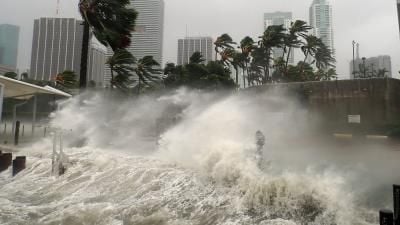
Extreme weather and climate events – including heavy rainfalls, tsunamis, earthquakes, floods, wildfires, heat waves, and storms – have become increasingly common globally, and their frequency and intensity continue to rise. Our World Risk Poll shows an increase in people’s experience of disaster related to extreme weather events around the world, rising from 27% in 2021 to 30% in 2023, with heavy rains or flooding being the most cited cause of disaster experience, followed by hurricanes or cyclones. In 2024 alone, more than 600 extreme weather events occurred globally, leading to around 1,700 fatalities, more than 824,000 displacements, and about 1.1 million people reported to have been injured.
Early warning systems are proven, cost-effective ways to mitigate the impact of extreme weather and climate events. They are effective mechanisms for hazard monitoring, forecasting, risk assessment and communication that enable communities, individuals, and governments to take timely action to reduce the impact of impending hazardous events. The 2019 Global Commission on Adaptation report identified that issuing a warning just 24 hours ahead of an impending hazard can reduce the ensuing damage by 30%. The report also indicates that investing US$ 800 million in early warning systems in developing countries could prevent damages of up to $16 billion per year. However, evidence shows that robust, effective early warning systems are still not available to half of countries globally, with developing economies and small Island states left behind.
The UN Early Warnings for All initiative launched in March 2022 aims for every person on earth to have access to and be protected by early warning systems by 2027. To achieve this, there is the need for systems that are both context specific and globally extensive in terms of how they assess risk, detect and forecast risk, and how they disseminate and communicate alerts for action. People-centred, impact-based multi-hazard early warning systems, supported by appropriate emergency preparedness strategies, are effective in reducing disaster risk and losses caused by extreme weather- and climate-related hazards at both the national and local level.
A comprehensive early warning system typically has four key components:
However, there are global variations in existing early warning systems in terms of their components and effectiveness. These are primarily due to variations in integration of the four core components of an effective early warning system, as well as funding, geographical coverage, and technological capacity.
Systematic reviews are crucial for decision-making because it uses rigorous, standardised methods to transform vast and often fragmented body of research into clear, actionable insights. It does this by identifying, selecting and combining results from multiple studies to provide a more reliable and clearer understanding of an issue. This approach helps to reduce bias, increase validity and reliability of findings, identify areas where more research is needed, and allow stronger risk-based decision making.
There are existing studies that have assessed the effectiveness of early warning systems in reducing the impact of extreme weather and climate events. However, a gap exists regarding systematic reviews which have synthesised the collective evidence on early warning systems to provide a robust summary of their effectiveness, their components, and the perceived barriers and enablers to their successful implementation.
At the Lloyd’s Register Foundation Global Safety Evidence Centre, we are conducting a mixed-methods systematic review to collate existing evidence on what works in disaster risk management, by assessing the effectiveness of early warning systems, the barriers and enablers to their successful implementation, and the experiences and views of communities regarding their usefulness and acceptability.
The systematic review will use robust methods guided by the PRISMA and PRISMA-Equity guidelines to answer the following research questions:
The protocol for this systematic review has been registered and is available on Open Science Framework.
Findings from this systematic review will inform the development of an evidence toolkit which will summarise existing global evidence on effectiveness of the different early warning systems that have been used to reduce loss of life, livelihood and asset during extreme weather and climate events. This review will also help inform the investments we at the Lloyds Register Foundation Global Safety Evidence Centre are making through the World Risk Poll into action grants. These grant-funded projects will in turn contribute to the evidence base on what works in disaster risk management.
To ensure that the systematic review findings are relevant to policy and practice, we have set up a consultation group made up of systematic review methods experts, and practitioners and researchers with expertise in disaster early warning systems. The consultation group is key to ensuring the relevance of the language and terminologies used in the conduct and reporting of the systematic review, and the policy and practice implications of the findings.
The systematic review is being conducted in-house, within the Lloyd’s Register Foundation Global Safety Evidence Centre, and is led by Dr Elizabeth Adjoa Kumah, working with colleagues at the Centre and Margherita Musella, a consultant Evidence Reviewer.
Do you have reports or studies on disaster early warning systems? Share it here.
We know that much of the evidence on these systems and how they work are in grey literature, meaning work produced outside of traditional academic databases and peer-reviewed journals. Because of this, we are keen to hear from anyone with relevant reports or articles – including conference proceedings, government reports, non-governmental organisational reports, working papers, theses and dissertations. This can be ongoing or completed studies and may be published or unpublished. We strongly welcome relevant evidence from a wide range of experts in disaster early warning systems globally, including researchers, practitioners, policymakers, governments, and other stakeholders.
Please contact Dr Elizabeth Adjoa Kumah at gsec@lrfoundation.org.uk by 31st March 2026 if you have reports, manuscripts, or data on any of the following:
Professor Milena Nikolova from the University of Groningen is using World Risk Poll data to analyse how changing technologies affect safety in the workplace across different industries and countries, informing more targeted safety interventions.
In this blog, Giulia Maistrello, Senior Analyst at RAND Europe introduces the findings from two new reports. These reports underpin the Global Safety Evidence Centre’s new evidence programme on safe work, exploring both the evidence needs of safety practitioners and the evidence currently available to support them.
A blog from Padmini Ravi, Project Manager – Risk Know-How, Sense about Science.


