
New technologies to improve health and safety performance
Discovering Safety joins forces with Safetytech Accelerator to build a Smarter Regulation Sandbox.
This page is approximately a 3 minute read
This page was published on
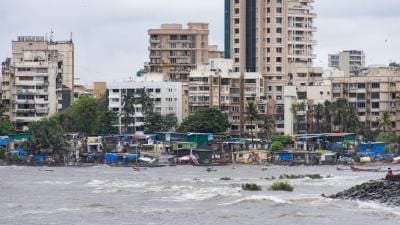
Lloyd’s Register Foundation has announced funding for a new initiative that aims to enhance climate resilience across India’s vulnerable coastal regions in Odisha, Tamil Nadu, and Kerala.
Led by India-based research lab CivicDataLab, the Coastal & Ocean Resilience Data Collaborative aims to transform coastal resilience planning by bringing together stakeholders at every level, from local community members to strategic decision-makers. At its core, it is an open-source online platform that consolidates and standardises critical datasets across coastal topography, oceanography, weather, socio-economic indicators, public finance, and environmental domains. By leveraging AI and machine learning alongside institutional capacity building, peer learning and knowledge sharing, the platform will generate insights to help public- and private-sector actors prioritise interventions, address financing gaps and build long-term, locally and regionally grounded climate resilience strategies.
Gaurav Godhwani, Founder and CEO, CivicDataLab, said, “India's coastline is more than a boundary between land and sea. It is home to millions of people, critical ports and infrastructure, rich ecosystems, and some of the country's most important economic activity. Yet this coastline is under growing pressure. Around 34% of India's coastline is experiencing erosion, while coastal communities are increasingly exposed to cyclones, flooding, rising sea levels and other climate-related hazards.
However, the data needed to understand and protect India’s coastline often remains fragmented and locked among various stakeholders. Through the Coastal & Ocean Resilience Data Collaborative, CivicDataLab aims to create a connective infrastructure that brings these critical datasets together, harnessing responsible AI to turn these datasets into actionable intelligence for local decision-making. By bringing together government, communities and other stakeholders, we hope to strengthen local capacity to anticipate risks, prioritise resource mobilisation and build resilience for our coastal communities.”
India makes up less than 0.25% of the world’s total coastline. At the same time, about a tenth of the world’s total coastal population lives on Indian coasts, with 560 million people relying on ocean industries including aquaculture, fishing, trade and tourism for their wellbeing.
States like Odisha, Tamil Nadu and Kerala are particularly susceptible to these impacts. The Government of India has identified them as Critical Vulnerable Coastal Areas (CVCA) - areas that need special consideration for protecting the vulnerable coastal environment and addressing challenges faced by local communities.
Despite these escalating risks, climate resilience data remains fragmented, inaccessible and underutilised, constraining evidence-based decision-making. Weak cross-departmental cooperation in government impedes system-level strategic planning, and investment choices are often reactive rather than preventative.
The Coastal & Ocean Resilience Data Collaborative will integrate datasets from different government departments with participatory feedback from local stakeholders, providing a holistic understanding of the interconnectivity and interdependence of community resilience, government spending and critical infrastructure services.
The project will then use advanced data analytics, AI and machine learning to develop insights and equip local governments with tools, data and skills to improve risk assessments, de-risk investments and attract innovative finance in support of effective climate resilience across physical infrastructure, financial and planning.
Ruth Boumphrey, Chief Executive, Lloyd’s Register Foundation, said: “Communities in Odisha, Tamil Nadu, and Kerala are on the climate and biodiversity frontline, increasingly exposed to higher temperatures, rising sea levels and more frequent and severe weather patterns. Failures in coastal and marine infrastructure systems caused by these hazards often have acute social and economic impacts due to increased dependency on maritime industries by local people.”
“There’s an urgent need to strengthen community resilience and coastal and marine infrastructure planning through integrated, evidence-based strategies, rooted in local contexts. This new initiative with CivicDataLab will help support data-driven decision-making, mobilising resources to improve safety outcomes for a huge number of people in one of the world’s most important maritime economies.”
Discovering Safety joins forces with Safetytech Accelerator to build a Smarter Regulation Sandbox.
Discovering Safety and Safetytech Accelerator have been awarded Government funding for new project ‘Enabling Innovation in Industrial SafetyTECH’.
A major step forward for ocean sustainability will be launched at the United Nations Ocean Conference 2025: a global network of Ocean Centres designed to put safety at the heart of the blue economy transition in emerging ocean economies.