

Rewriting Women into Maritime makes London International Shipping Week debut
Rewriting Women into Maritime makes London International Shipping Week debut.
This page is approximately a 5 minute read
This page was published on
Louise Sanger, Head of Research, Interpretation and Engagement
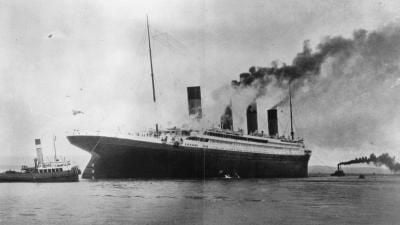
The loss of the RMS Titanic in April 1912 remains one of the most powerful and enduring maritime disasters in history. More than a century later, its significance lies not only in the scale of the tragedy, but in what followed. Titanic became a catalytic moment—exposing systemic failures in ship design, communication, emergency response and governance, and prompting a level of international cooperation that fundamentally reshaped international and British maritime safety law, policy and practice.
At the time of her maiden voyage, Titanic was widely regarded as exemplary. She met, and in many respects exceeded, the standards required by regulators of the day. Yet the disaster laid bare fatal gaps: insufficient lifeboats, limited wireless radio coverage, lack of crew and passenger drills, and no coordinated international search and rescue capability. These shortcomings were not unique to Titanic; they reflected the realities of a global industry operating without consistent international rules.
Crucially, the response to Titanic demonstrated that maritime safety is often only reviewed seriously after catastrophe. International inquiries in the United States and Britain led to rapid changes in practice, including lifeboat requirements based on passenger numbers, continuous radio watches, improved watertight subdivision, and the establishment of the International Ice Patrol. These measures marked a shift from reactive learning at a national level to collective action across borders.
The disaster also helped crystallise a wider truth: shipping is inherently international. Ships may be built in one country, owned in another, flagged in a third, and crewed by people from many more. Without international agreement, safety standards would always be uneven and enforcement inconsistent. It was this recognition that led to the first International Convention for the Safety of Life at Sea (SOLAS), adopted in 1914. Although the First World War delayed its implementation, SOLAS became the cornerstone of maritime safety regulation, evolving through successive revisions to address new technologies, vessel types, and operational risks.
The legacy of Titanic can also be seen in how lessons were applied to subsequent vessels. Changes made to Britannic, her younger sister ship, reflected a direct response to the disaster, with higher bulkheads, improved lifeboat davits, and enhanced survivability. Yet the sinking of Britannic during the First World War was a sobering reminder that technical improvements alone are never enough. Human factors, training, operational decisions, and regulatory enforcement all play a critical role in determining outcomes.
Over time, SOLAS expanded into a comprehensive framework covering ship construction, navigation, communications, cargoes, safety management, and maritime security. It has been continually amended to reflect emerging risks, from the introduction of satellite communications and enclosed lifeboats to the concept of “safe return to port” for modern passenger ships. The Convention’s longevity reflects both its adaptability and the complexity of governing a fast‑changing global industry.
Alongside SOLAS, the need for a permanent international body to oversee maritime safety became increasingly clear. This led to the establishment of the International Maritime Consultative Organization (later renamed International Maritime Organization, IMO), which has, since 1959, provided a forum for cooperation on safety, environmental protection and operational standards. Through conventions such as MARPOL, the International Safety Management Code, and the Polar Code, the IMO has sought to translate hard‑won lessons from disasters into preventative measures.
Yet progress has never been linear. Maritime history is punctuated by further tragedies—from ferry disasters to oil spills—that have exposed weaknesses in regulation, enforcement, or compliance. Incidents such as the Herald of Free Enterprise and Princess Victoria revealed the devastating consequences of management failure, poor design, and inadequate emergency preparedness. In response, new mechanisms emerged, including port state control regimes that allow ships to be inspected regardless of flag, and management systems that place responsibility for safety squarely with operators.
Search and rescue capabilities have also been transformed since 1912. From the limited radio range available to Titanic, the sector has moved to a global distress and safety system supported by satellites, digital tracking and coordinated international response. Today, rapid emergency modelling, specialist salvage expertise and multinational cooperation play a critical role in protecting lives at sea. Even so, new challenges continue to emerge, particularly as vessel sizes increase, cruise tourism into polar regions expands, and climate change reshapes operating environments.
Perhaps the most enduring legacy of Titanic is its power to hold public attention. As the most famous shipwreck in the world, it has ensured that questions of maritime safety remain visible beyond the industry itself. Public scrutiny, political pressure and collective memory have all played a role in driving reform—just as they did with earlier campaigns against overloaded “coffin ships” in the nineteenth century.
Maritime disasters are, at their core, moments where systems fail and lives are lost. Studying them is not just an exercise in hindsight, but a responsibility. The regulatory frameworks that exist today are the cumulative result of hard lessons learned over generations. They remind us that safety is never static, that vigilance is essential, and that international cooperation remains the only credible way to manage risk in a truly global industry.
More than a century on, Titanic continues to shape how we think about safety at sea—not as a single event frozen in time, but as the starting point for a living framework that must keep evolving if it is to protect people, property and the environment in the decades ahead.
Lloyd’s Register Foundation’s Heritage Centre, in cooperation with The Ocean Foundation, published: Titanic Law and Policy: The Wreck's Role in Changing International Maritime Safety and Salvage Law in August 2026, a few months after this blog was first published. This blog is based on the chapter by Lloyd's Register Foundation's Louise Sanger titled: Impact of the Loss of Titanic on Maritime Safety and International Law and Policy. See also The Ocean Foundation’s blog on the impact of Titanic on Maritime Salvage Law.
Rewriting Women into Maritime makes London International Shipping Week debut.
In this podcast, Lloyd's Register Foundation‘s Louise Sanger and Benjamin Ferrari discuss the catastrophic impact polluting wrecks are having on our oceans.
Leading maritime organisations in call to change perceptions on the historical role of women in shipping and showcase female involvement in the industry.

