Engineering X grants £1mil to improve engineering education
Engineering X gives £1 million worth of grants to projects across 14 countries to boost the quality of engineering education and training.
This page is approximately a 5 minute read
This page was published on
Cities in the Philippines are expanding, construction projects are accelerating, and companies are scaling to meet demand. However, the enormous opportunity for the engineering sector is tempered by the lack of skilled technical professionals needed to fulfil it.
It’s estimated that the country has a shortage of 165,000 classrooms1. Around 1.6 million young people are out of school 2and the impact of this is that the country is experiencing a severe shortage of workers with recognised skills.
The problem is not only one of numbers; in safety-critical roles in particular, there is a significant gap between expected competence and real-world capability, and that gap can have serious consequences. Workplace injuries, infrastructure or equipment failures and quality issues can often be traced back to a combination of inadequate safety understanding, limited technical training and uneven access to recognised qualifications. In short, to rise to the engineering opportunity in the Philippines, engineers need to adopt a safety culture.
One reason that a skilled workforce is needed is that sectors including infrastructure, renewables, manufacturing and shipbuilding are all predicted to continue growing.
The Southeast Asia Skills Enhancement Programme (SEASEP) was established to develop a safety-skilled workforce and improve engineering safety by increasing access to internationally recognised skills and competence development. Through this approach, the programme aims to support safer working practices, reduce avoidable workplace incidents and contribute to the safety and integrity of critical infrastructure.
It tackles barriers including shortages of certified workers, limited access to internationally recognised qualifications, gaps between training and industry needs, and the exclusion of marginalised groups. Through education, certification and employment pathways, SEASEP supports both workforce development and long-term safety.
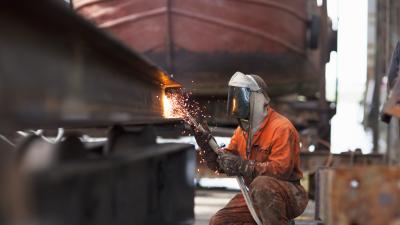
The programme provides training in safety-critical disciplines, including welding, non-destructive testing (NDT), health and safety, and inspection, where small mistakes can have serious consequences.
SEASEP combines structured technical training with assessment pathways designed to develop and demonstrate competence.
Financial circumstances, location and lack of awareness of engineering career opportunities often stop people from continuing – or even starting – to progress in an engineering field. To make it possible for more people to participate in SEASEP training, funded placements and bursaries are available, including 100% bursaries for women. Much of this support is focussed on groups that are underrepresented in engineering, or groups that are in some way disadvantaged, with the aim being to increase the level of diversity within the Philippines engineering sector, and across Southeast Asian engineering more broadly. Across the participating SEASEP countries, the programme has so far trained more than 4,500 learners.
One of the factors that distinguishes SEASEP is that the courses available match the skills demand. Shortages of qualified engineers in the Philippines are currently impacting construction, energy, manufacturing and maritime industries, so to ensure that participants are well-placed to find work and contribute to the engineering profession, SEASEP is designed to fill the gaps that are already visible.
Graduates will help maintain safe practices, improve inspections and strengthen quality assurance. By raising standards beyond individual roles, SEASEP aims to foster a stronger culture of safety, leading to fewer incidents and safer infrastructure.
Keira Solis Vicente, who is taking the SEASEP CSWIP 3.0 Visual Welding Inspector course delivered by TWI, said:
“I started on the course because I wanted to know more about welding inspection and gain usable knowledge that I can take into the field. The training through SEASEP has not only helped me with this, but has also built my confidence in carrying out inspections.
“I have a much stronger appreciation for why standards are needed and the role they play in safety – for us as we’re working and long after our projects are complete.”
Archer John Tamboong, also undertaking the SEASEP CSWIP 3.0 Visual Welding Inspector course delivered by TWI, said:
“The certification I get through SEASEP will improve job prospects and opens up the possibility of working overseas. One of the main reasons I chose this course was the opportunity to become a certified welding inspector and potentially work abroad so the fact that our certifications are internationally recognised is really important to me.
“The programme has helped me improve my knowledge of weld quality as well as relevant safety standards.”
SEASEP is partnered with industry bodies including Philippine Welding Society, Inc. (PWS) and Cutech Philippines. TWI South East Asia and Don Bosco-One TVET Philippines signed a Memorandum of Understanding in October 2025 to support collaboration under the SEASEP programme, marking a key milestone in collaboration for technical and vocational education and training.
The MoU formalised a partnership aimed at bridging the gap between education and industry, ensuring that engineering learners and professionals aiming to expand access across the Philippines are equipped with the skills for a safer future. Work still to be done includes embedding international standards, increasing access to recognised qualifications, and supporting clear and sustainable routes into the industry.
Engineering X gives £1 million worth of grants to projects across 14 countries to boost the quality of engineering education and training.
Maritime Just Transition Task Force collaborative project sets framework to equip seafarers with skills as shipping transitions to zero emissions.
Discovering Safety joins forces with Safetytech Accelerator to build a Smarter Regulation Sandbox.