Rather than duplicating existing research, IMSDN will draw together the substantial knowledge already available across industry, academia and government. Through a programme of workshops and international collaboration, the Network will identify where evidence is strong, where important gaps remain, and what actions are needed to support safer adoption of alternative fuels and technologies.
This work will help improve understanding of the risks associated with maritime decarbonisation while supporting the development of safer approaches to vessel design, port infrastructure, operations, training and regulation. The Network will also contribute to the development of a global roadmap for safer maritime decarbonisation, helping researchers, industry and policymakers prioritise future work.
The Networking Academy is being delivered through an international consortium of academic, industrial and regulatory partners spanning Europe, Africa, Asia and North America. Consortium members include universities, research institutes, maritime authorities, ship operators, technology developers, classification societies and industry bodies, ensuring a broad range of expertise and perspectives are represented.
For Lloyd's Register Foundation, the programme reflects the importance of understanding safety risks alongside efforts to reduce emissions. As new fuels are introduced across the maritime sector, there is a need to ensure the impacts on people, infrastructure and the environment are properly understood and managed in all regions of the world, not only in those with the greatest resources and research capacity.
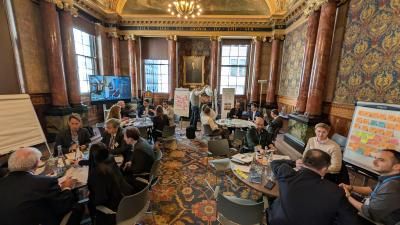
Workshops will bring together experts from around the world, beginning with an event in London and continuing through regionally hosted workshops in Indonesia, Malaysia, the Philippines, China and other major maritime centres. The Network is already growing, with more than 30 industrial partners expressing interest alongside additional academic institutions. Discussions are also under way with organisations including the University of Malaysia Terengganu and the University of Oviedo, helping to build a diverse and globally connected community focused on safer maritime decarbonisation.