Experts highlight the need for a systems approach to safe maritime decarbonisation
This page is approximately a 3 minute read
This page was published on
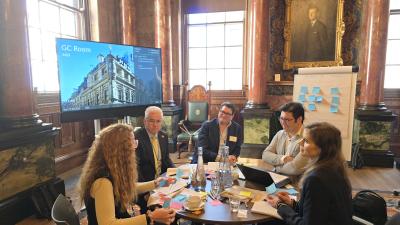
The transition to low and zero-carbon fuels is reshaping the maritime sector, but experts warn that achieving it safely will require far more than technological innovation.
Find out more
Workshop findings highlight challenges of future fuels
The transition to low and zero-carbon fuels is one of the biggest challenges facing the maritime sector. While much attention has focused on the technologies needed to reduce emissions, experts working across shipping, regulation, insurance and academia are warning that technology alone will not deliver a safe transition.
That was one of the key messages to emerge from the first workshop of the International Safer Maritime Decarbonisation Network (ISMDN), a global research initiative of nine partner institutions across eight countries, led by the University of Strathclyde and funded by Lloyd's Register Foundation through its Networking Academic Grant programme. Held at Lloyd's Register's headquarters in London on 23 April 2026, the workshop brought together 26 experts from 14 organisations spanning industry, regulation, classification, insurance and academia, and explored the research, knowledge and capability gaps that must be addressed to support the safe adoption of alternative fuels.
From research to roadmap
The workshop forms part of a wider programme of international engagement designed to inform the development of a Safer Maritime Decarbonisation Roadmap. Through a series of regional workshops and collaborative research activities, the ISMDN project is identifying priorities for future research and building connections between researchers, industry, regulators and policymakers.
Participants examined challenges across four key areas: infrastructure and logistics; ship design, operations and systems; leakage, dispersion, explosion and fire; and human factors and training. While each area raised its own technical questions, participants repeatedly returned to one central theme: the challenges of maritime decarbonisation are deeply interconnected. The safe adoption of alternative fuels will depend on understanding how infrastructure, vessel and system design, technical risk, regulation and human factors interact, rather than addressing each area in isolation.
Beyond technology: creating the conditions for safe decarbonisation
A clear message from the workshop was that safe maritime decarbonisation depends on far more than technological readiness. Participants highlighted regulation, insurance, investment, infrastructure, operational responsibilities and workforce capability as critical elements of the enabling environment needed to support a safe transition. Even as technologies advance rapidly, uncertainty in these areas risks slowing adoption and limiting investment.
The discussions also highlighted the importance of human factors. Participants stressed that seafarers, port workers and operators are increasingly being asked to manage new fuels and complex systems that are evolving faster than training and competency frameworks. Rather than treating human factors as a later consideration, attendees argued that they should be embedded from the earliest stages of vessel and system design.
Sharing knowledge for a global transition
Another recurring theme was the need for better knowledge sharing across the maritime sector. Participants noted that valuable lessons from system failures, near misses and operational experience are often retained within individual organisations, limiting opportunities for wider learning. Greater collaboration and more structured approaches to sharing safety knowledge were identified as important enablers of a safe transition.
The workshop also highlighted the global nature of the challenge. Participants emphasised that safe decarbonisation will require approaches that work not only in major shipping centres, but also in regions with different levels of technical capacity, infrastructure and regulatory support. Making sure that knowledge, tools, training and safety guidance are accessible worldwide will be critical if the transition is to be both safe and equitable, helping to avoid the creation of new safety gaps between regions.
Insights from the workshop are now contributing to the development of the ISMDN roadmap and helping shape future project activities. As the network continues to engage experts from around the world, it aims to strengthen the evidence base for safer maritime decarbonisation and identify collaborative research priorities that can support the sector's transition in the years ahead.
Across the workshop discussions, participants stressed that safe maritime decarbonisation is ultimately a systems challenge, requiring coordinated progress across technology, people, infrastructure, policy and finance.
Related Content


The International Fund for Fishing Safety goes global – 65,000 fishers supported
The International Fund for Fishing Safety, has committed funding totaling £220,000 to support six fishing safety projects.

New Ocean Centres to drive safer and more sustainable ocean economies across the Global South
A major step forward for ocean sustainability will be launched at the United Nations Ocean Conference 2025: a global network of Ocean Centres designed to put safety at the heart of the blue economy transition in emerging ocean economies.