
Helping the maritime industry improve sustainability
New Sustainable Shipping Initiative programme funded by Lloyd’s Register Foundation will provide sustainability insights for maritime industry stakeholders.
This page is approximately a 3 minute read
This page was published on
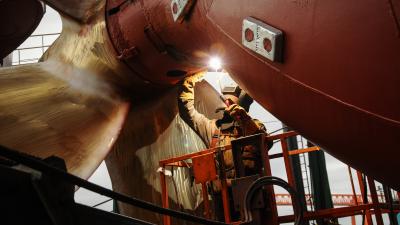
The report, Alang in Transition: From Compliance to Capability, focuses on a Hong Kong Convention (HKC)-compliant recycling facility in Alang, Gujarat. It shows that while safety standards have improved in recent years, meeting compliance requirements alone will not be enough as the scale and complexity of ship recycling increase.
Ellie Besley-Gould, Chief Executive of SSI, said the industry now needs to move beyond compliance: “The progress made is real, but it will not meet the scale and complexity of vessel retirements coming in the next decade. The next phase of safety will depend on digital innovation, decisions made at the design stage, and the workforce's knowledge that turns procedures into safe daily practice.”
The research points to a connected set of changes needed across the system. This includes making better use of digital tools to plan and manage work safely, designing ships with dismantling in mind from the outset, and supporting the people whose experience and judgement underpin safe day-to-day operations.
At yard level, tools such as real-time tracking and virtual modelling could help supervisors manage increasingly complex operations and reduce risks. But the study also shows that many safety challenges begin much earlier, in how ships are designed, maintained and documented over their lifetime. It recommends creating a digital record that stays with a vessel throughout its life, so information about materials and risks is not lost.
Olivia Swift, Head of Maritime Systems at Lloyd’s Register Foundation, said: “Safer ship recycling depends on the whole system working together - from how ships are designed, to how information is shared, to how people are supported to do their jobs safely. Progress doesn’t come from one intervention alone, but from connecting digital tools, design decisions and workforce knowledge in a way that strengthens safety at every stage. Clear, shared access to reliable information is a vital part of this, helping to join up existing work, show what works, and track progress across the industry.”
The research also places strong emphasis on the workforce. At the Alang facility studied, the Mukadam system (where supervisors build experience over decades) was identified as a critical safety asset.
Maria Marilyn Joseph, Ship Recycling Lead at SSI and author of the report, said: “Spending time inside the facility made it clear that this accumulated operational judgement is one of the most important safety assets. The next decade of growth must protect both this knowledge and the engineering innovation already happening on the ground.”
These insights come at a time when ship recycling is expected to increase significantly. Vessels arriving over the coming decades will be more complex, and the industry will need stronger systems, better information and continued investment in people to dismantle them safely.
Alang was selected for the study because of its established industrial ecosystem. The cluster includes 128 operational plots, of which 115 are now HKC compliant, and supports a wider network of secondary markets and more than 80 re-rolling mills. Recovery rates already approach 98% of a vessel’s mass, and capacity is expected to grow significantly by 2035.
The report calls for a long-term industry roadmap to guide this growth, bringing together investment, regulation and innovation to improve safety and support more sustainable ship recycling.
New Sustainable Shipping Initiative programme funded by Lloyd’s Register Foundation will provide sustainability insights for maritime industry stakeholders.
The International Fund for Fishing Safety, has committed funding totaling £220,000 to support six fishing safety projects.
A major step forward for ocean sustainability will be launched at the United Nations Ocean Conference 2025: a global network of Ocean Centres designed to put safety at the heart of the blue economy transition in emerging ocean economies.

