Partnership to build expertise for safer fishing vessels

This page is approximately a 3 minute read

This page was published on

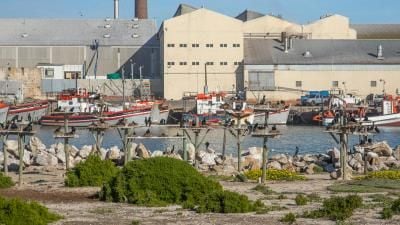
Fishing boats docked at harbor with industrial buildings in background and seabirds perched on poles.

Strengthening skills for a safer South African fishing fleet

Overview

A project which aims to increase the number of maritime professionals in South Africa qualified to support vital vessel stability inspection and certification processes is now getting under way.

The partnership project aims to address a critical shortage of naval architects across that region in a bid to address the safety challenges of the local fishing industry.  The shortage puts pressure on vessel inspection and certification processes, creating a bottleneck and putting fisher safety at risk.

Champions of fisher safety say it’s vital to make sure that those going out to fish do so in safe vessels. It was first raised at the 2024 Fishing Industry Safety and Health (FISH) Platform meeting in Cape Town, South Africa. Now a new project designed to provide training is looking to make that happen.

The two-year project “Upskilling maritime professionals in South Africa towards a safer fishing fleet” brings together the University of Southampton’s Wolfson Unit with The Seafarer's Charity and the Northeast Centre for Occupational Health and Safety (NEC). It has been funded by Lloyd’s Register Foundation as part of its “Engineering a Safer World” funding opportunity.

Its delivery will be supported by the Cape Town-based SSTG Maritime Training Academy which specialises in compliance audit services for the South African commercial fishing fleet. They will host the pilot course. 

Regional project with global opportunity

Work will be carried out to design and pilot a new, accredited course for developing expertise for local maritime professionals through abbreviated naval architecture training. Classroom-based activities, simulations and mock inspections will enable the trainees to undertake basic stability appraisals of fishing vessels, thus supporting fishing vessel inspection and certification processes. 

While the initial project specifically targets South Africa, a feasibility study will investigate whether it could be expanded to more countries in the southern Africa sub-region. 

Dr Matteo Scarponi, Vessel Stability Lead from the University of Southampton’s Wolfson Unit, said: “We are proud that our proposal has been backed by the Foundation. Our commitment is to create an agile training model that delivers lasting changes for the South African fishing industry.”

Olivia Swift, Head of Maritime Systems, Lloyd’s Register Foundation, said: “We know that fishing is one of the most dangerous occupations in the world. At Lloyd’s Register Foundation, we are committed to supporting projects that will work to do all they can to reduce that danger.” 

A spokesperson from The Seafarers' Charity said: "Fishers are among the seafarers most at risk from safety failings. Across southern Africa and beyond, fishers need and deserve safely built, inspected, and certified vessels. We look forward to championing the Wolfson Unit's vital work in this area to improve seafarers' working lives." 

Dr Julie Sorensen, Northeast Center for Occupational Health and Safety Director, said: “As indicated by fisheries colleagues concerned about vessel stability and the welfare of fisheries workers in the region, the lack of qualified vessel inspectors is a key bottleneck that makes it difficult for the fishing industry to ensure safety. Dr. Scarponi is widely known for his expertise in this area and has demonstrated his ability in curriculum development through his partnership with groups like FAO. I am very eager to support him and the team in their efforts to solve this key issue in fisheries safety and look forward to working with them.”