Who funds engineering safety research?

This page is approximately a 3 minute read

This page was published on

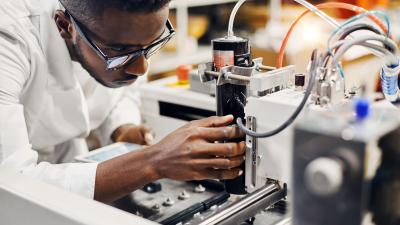
engineer in lab coat carefully adjusting laboratory equipment with tubes and wires connected to a testing apparatus.

By developing understanding of the global engineering safety research publication and funding landscape, this work is intended to support research and funding in the field, leading to the development of safer engineered systems.

The report has three primary intended uses:

  1. For funders and commissioners, to understand reach and scope of engineering safety research funding and their place within the ecosystem.
  2. For researchers, to understand current research gaps, popular topics and the availability of engineering safety research funding globally.
  3. For practitioners and policymakers, to understand the availability of geographically relevant safety knowledge, which also serves as a proxy indicator of safety and risk awareness in new and emerging sectors and systems.

The quick read

Engineering safety research is a term used for this project to describe the generation and sharing of scientific knowledge related to assessing and controlling risks within engineered systems and processes, with the overall aim of preventing accidents and reducing harm to people and property. The goal of this project was to explore how engineering safety research has evolved globally over the past decade; where the funding has gone, what areas have grown, and what trends are shaping the landscape.

The findings show that engineering safety research is a rapidly growing field, having developed considerably in recent years. Broadly, the bibliometric review of 15,705 publications from 130 countries found:

  • Large differences in engineering safety research outputs and funding across the globe. China, the USA and South Korea generally led the way, having published and funded the most engineering safety research.
  • Significant national variation in funding sources, collaborations and funder acknowledgements, with collaborative working seen more in Europe than elsewhere.
  • Differences between countries in the types of leading funding organisations may contribute to variation, with researchers in high publication countries being heavily supported by their governments.
  • The popularity of different engineering safety topics has changed over time, with publications on machine learning and data-driven methods growing the most in the past decade.
  • Funding patterns in sectors related to Lloyd’s Register Foundation’s strategy are similar to those overall, except in maritime and electrical power where Europe has a larger role.

Download the briefing

Who funds engineering safety research?

This report shows that engineering safety research has grown rapidly in recent years. It is intended to guide future research and funding to support the development of safer engineered systems.

Download Who funds engineering safety research? (PDF, 4.34MB)

Citation (briefing)

If you wish to use and reference the Who funds engineering safety research? briefing in your own work, please include the following DOI: https://doi.org/10.60743/3dk5-cq41
 
Example Citation in IEEE Style:
 
Lloyd's Register Foundation, 'Who funds engineering safety research? (Briefing)', Lloyd's Register Foundation, 2025. doi: 10.60743/3DK5-CQ41.

Download the technical report

Who funds engineering safety research?

This report maps and analyses the global landscape of engineering safety research and its funders, providing insights into topics, geographic distribution, funding sources, and sector-specific work to guide strategic collaboration.

Download Who funds engineering safety research? (PDF, 11.50MB)

Citation (technical report)

If you wish to use and reference the Who funds engineering safety research? technical report in your own work, please include the following DOI: https://doi.org/10.60743/y6yc-yr95

Example Citation in IEEE Style:

Lloyd's Register Foundation, 'Who funds engineering safety research? (Technical Report)', Lloyd's Register Foundation, 2025. doi: 10.60743/Y6YC-YR95.