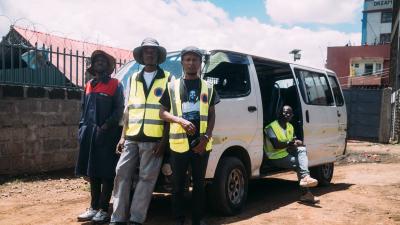
In Nairobi, matatu drivers and conductors carry people across the city. Domestic workers sustain homes. Waste pickers collect, sort and recover materials that would otherwise be discarded. This work is essential, but too often it happens without contracts, stable income, insurance or adequate protection.
For Liston Osala, a matatu conductor, risk is part of the working day.
“In Nairobi, many people depend on informal work,” he says. “We have the matatu workers and the domestic workers and the waste pickers. We keep the city moving, but our work is often unsafe. Uncertainty, danger and risks are part of everyday life.”
The figures behind that experience are stark. Findings from Haki Data Lab’s From Margins to Metrics project show that 62% of matatu workers report experiencing serious harm or injury in the past two years. Almost half, 49%, have experienced violence in the past month. And 97% are paid daily, without a stable income.
For workers, these numbers describe the pressure of trying to earn enough each day, the insecurity of working without formal protection, and the constant exposure to harm in one of Nairobi’s most visible but under-protected sectors.
Sultan Ruvanga, a matatu driver on the Dandora-Nairobi route, has worked in the industry for nearly seven years.
“It’s not been easy,” he says. “You have to achieve a target for yourself, your employer and your conductor. There are times you’ll work and not even make a shilling. You’ll go home without money.”
For Alex Kibe, a matatu stage operator, the lack of formal protection makes every risk feel personal.
“There’s no insurance or any form of contract,” he says. “If I get run over or hurt, that’s my problem. I don’t feel safe.”
These are the realities that often sit outside official systems. Informal workers are everywhere, yet their experiences are frequently missing from the data shaping decisions about safety, rights and working conditions. As a result, policies risk being made without the people most affected by them.
Stephen Mwangi, founder of Haki Data Lab, puts it simply: “When people are missing from data, they are missing from decisions.”
This sits at the heart of ‘From Margins to Metrics’, a project led by Haki Data Lab in close collaboration with Data4Change. Inspired by (and building on) findings from the 2024 Lloyd’s Register Foundation World Risk Poll, the project works with informal workers to generate their own evidence about the risks they face.
The approach is participatory. Workers are trained as researchers, combining lived experience with surveys and new data tools to build a more accurate picture of safety in informal work. Rather than being treated only as subjects of research, matatu workers and other informal workers are helping shape the questions, collect the information and explain what the findings mean in practice.
Liston describes the impact.
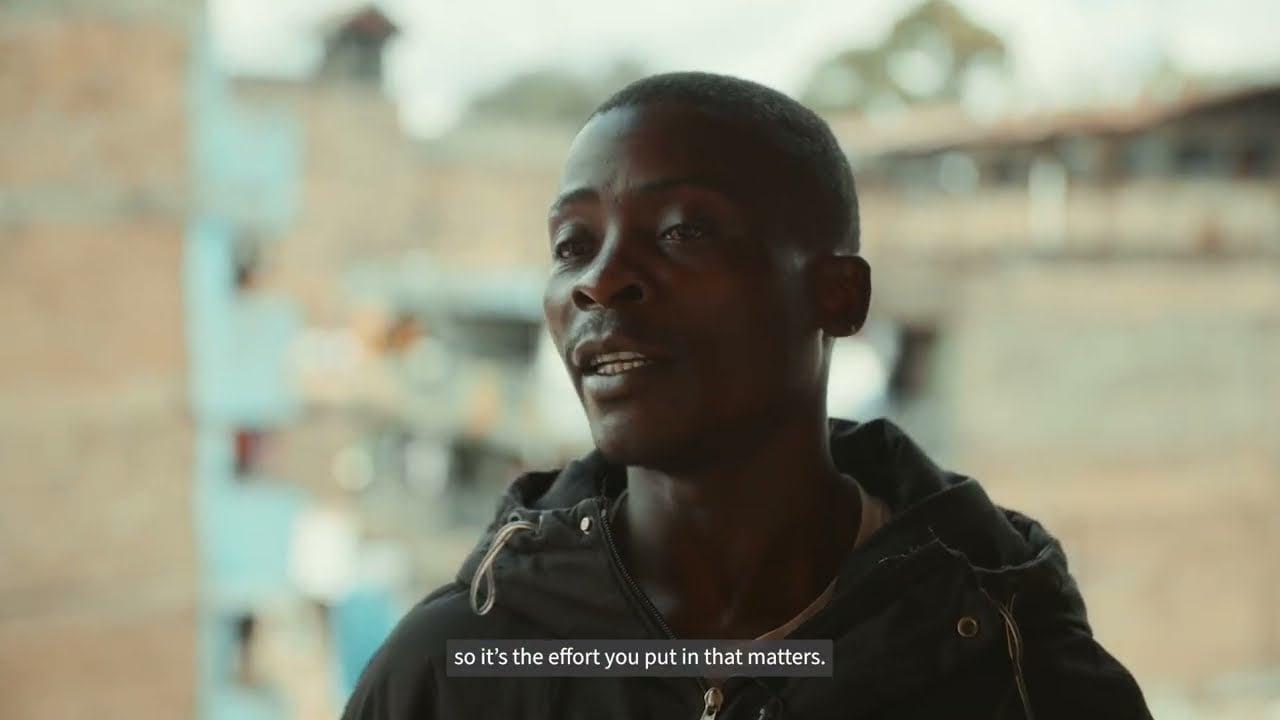
“Now things are starting to change,” he says. “Through this project, we’re not just workers; we are researchers. We collect information. We speak with others in the industry. We share what is really happening on the ground.”
Lived experience can reveal risks that external observers might miss. A worker knows where violence is most likely to happen, when income pressure becomes unsafe, which routes are more dangerous, and how fear, fatigue and uncertainty shape decisions. When that knowledge is combined with structured data collection, it can help produce evidence that is both rigorous and grounded.
For Sultan, being heard is part of what makes the project meaningful.
“Previously, people were making decisions about drivers without understanding us,” he says. “Now that we drivers have spoken out, I know our voices will be heard.”
Through its small grants programme, Lloyd’s Register Foundation funds From Margins to Metrics, supporting Haki Data Lab to test new approaches to improving safety. The programme is designed to help organisations initiate partnerships, explore ideas and pilot activities in areas linked to the Foundation’s mission to engineer a safer world. In this case, that support has helped Haki Data Lab train worker researchers, run meetings, carry out surveys with 1,000 informal workers and build a stronger community around the work.
Stephen describes the grant as a turning point.
“We are very grateful to Lloyd’s Register Foundation,” he says. “Through that grant, we were able to do meetings, first of all, with the worker researchers, train the worker researchers, and even surveys with a thousand informal workers.”
For Haki Data Lab, the project has helped the organisation move from training towards leading independent research. It has strengthened its credibility and created a growing network of informal workers who are involved in the work daily.
“It was a grant that also really put Haki Data Lab on its feet,” Stephen says. “Now we have a community of informal workers that we work with on a daily basis.”
Many safety challenges are discussed at the policy level, but change often depends on whether the people closest to risk are involved in shaping the response. In Nairobi’s matatu sector, workers understand the pressures of daily pay, the risks of violence, the impact of long hours, and the absence of formal protection. Their insight can help make interventions more realistic and effective.
Stephen sees potential beyond a single sector or city.
“This project is already influencing conversations with the local authorities and employers in the region,” he says. “It is helping to shape better decisions about safety and working conditions. It is building a model that can be scaled across sectors and across countries to ensure that more workers are seen, heard and protected.”
That gives From Margins to Metrics wider significance. Informal work is not unique to Nairobi, and many workers around the world face similar gaps in safety, income security and representation. If community-generated data can make these risks visible in one context, it offers a model for others to do the same.