

New technologies to improve health and safety performance
Discovering Safety joins forces with Safetytech Accelerator to build a Smarter Regulation Sandbox.
This page is approximately a 5 minute read

Across Colombia, decisions about transitioning to cleaner energy and infrastructure will shape land use, livelihoods, local ecosystems and economic outcomes for decades to come.
If those decisions are made without the people most affected by them, well-intentioned projects can stall. Communities may feel excluded. Companies can lose their social licence to operate. Public policy can change with political cycles. Progress slows, and the transition becomes less safe, less fair and less durable.
This is the challenge InterNodos was created to address.
Powered by Movilizatorio, InterNodos is part of the Engineering X Safer Complex Systems programme, funded by Lloyd’s Register Foundation in partnership with the Royal Academy of Engineering. It brings together different parts of Colombia’s energy system, including civil society, government, industry, academia and communities, to shape practical missions for change.
Its starting point is simple: decarbonisation is both a technical shift and a social, economic and governance challenge.
In Colombia, climate risk is already part of daily life. According to Lloyd’s Register Foundation’s World Risk Poll 2024, 84% of people in Colombia see climate change as a serious threat to their country, compared with the global average of 72%. Yet, the country remains heavily reliant on fossil fuels.
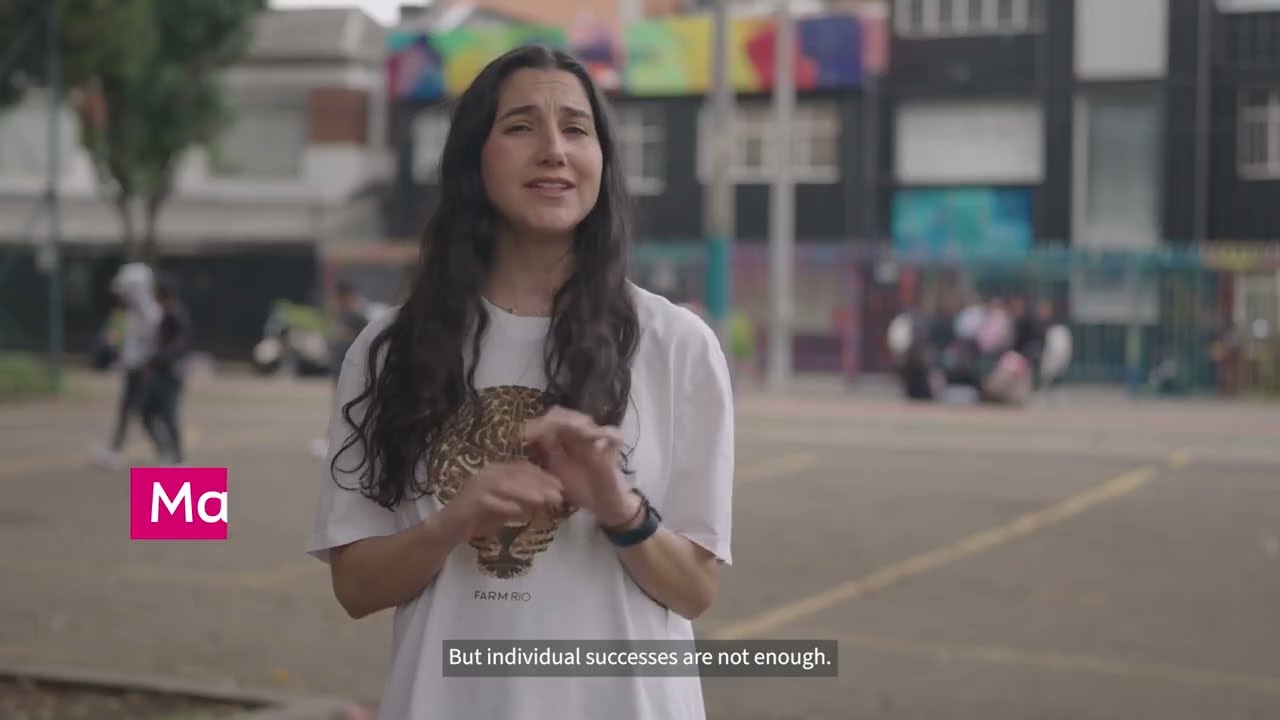
“Our reliance on fossil fuels is driving flooding, drought and air pollution,” explains Manuela Murrle, Programmes Director at Movilizatorio. “It is placing pressure on our rainforests and ecosystems… It threatens livelihoods, water sources and the people who depend on them.”
The need to move away from fossil fuels is clear. The harder question is how to do it in a way that builds confidence, protects biodiversity and creates lasting benefits for local people.
InterNodos approaches that question through systems thinking.
“Our systems approach means recognising that energy, infrastructure, trust and communities are connected,” Manuela says. “If we change one part without considering the others, we create new risks. But when we work holistically, we can strengthen our resilience to climate change, and make people safer.”
This is where InterNodos’ work connects directly to safety. Decarbonisation is essential to reduce climate risk, but the process of building new infrastructure also needs to be safe, fair and trusted. If communities are excluded, projects may face resistance. If local economies do not benefit, the transition can deepen inequality. If Indigenous knowledge is not integrated into governance, decisions may miss vital understanding of land and water, and impact the ecological landscape that marginalised communities depend on.
At a recent workshop in Bogotá, InterNodos brought this approach to life. Cross-sector participants discussed clean energy technologies and examined the conditions needed for long-term change: governance that can outlast political cycles, public narratives that build support, and policies that give confidence to communities, investors and workers.
Juliana Uribe Villegas, CEO and Co-founder of Movilizatorio and an InterNodos board member, described the question at the heart of the discussion.
“Where is the energy in this ecosystem?” she asked. “How are we going to come together to achieve systemic change?”
Santiago Ortega, an InterNodos board member, commented that the workshop focused on how to build structures that can endure.
“We’ve been discussing how to have a governance that transcends different governments,” he says, “how to have a narrative that allows us to promote the energy transition, and how to diversify the economy of our territories using clean energy.”
Ana Carolina Gonzalez, also an InterNodos board member, pointed to the importance of a clear long-term vision.
“We were discussing the importance of having a clear long-term vision and public policy that could drive different actors in the private sector, public sector and civil society to bring about one of the most important transformations for Colombia in energy and the economy,” she says.
Their work is practical; it’s about bringing people who may otherwise operate separately into the same conversation, so they can identify shared priorities and act on them. It also recognises that safety depends on technical design and on whether infrastructure is planned with the people and places it affects.
This ambition reflects the wider purpose of Engineering X’s Safer Complex Systems programme. Critical infrastructure, including energy, transport, manufacturing and digital systems, is shaped by social, technical and environmental relationships. To generate safer outcomes, those relationships need to be understood holistically.
In Colombia, that means building an energy transition that protects biodiversity while creating opportunity. Reducing dependence on fossil fuels while strengthening local economies. Bringing clean infrastructure into people’s lives while giving communities a voice in how that infrastructure is planned and governed.
The solar-powered cable cars above Ciudad Bolívar offer a local example of what cleaner infrastructure can make possible. They reduce emissions, improve access to work and education, and bring tangible benefits to communities that were once harder to reach.
With support from Lloyd’s Register Foundation and Engineering X, InterNodos is asking how this approach can be expanded across the wider energy system, to ensure that Colombia’s transition is fast, safe and equitable.
Our systems approach means recognising that energy, infrastructure, trust and communities are connected. If we change one part without considering the others, we create new risks. But when we work holistically, we can strengthen our resilience to climate change and make people safer.
Manuela Murrle Programmes Director, Movilizatorio
Discovering Safety joins forces with Safetytech Accelerator to build a Smarter Regulation Sandbox.
Discovering Safety and Safetytech Accelerator have been awarded Government funding for new project ‘Enabling Innovation in Industrial SafetyTECH’.
Exclusively from ‘SAFE: A collection of works exploring a safer world’, this lamp translates real time data into a ‘digital twin’.