

Open burning of waste thematic learning resources
Grant learnings and best practice outcomes from the open burning of waste grant projects with Engineering X.
This page is approximately a 5 minute read

Across Kenya, waste systems depend on people whose work is rarely recognised.
Waste pickers recover plastics, metals and other materials from bins, streets, rivers, dumpsites and informal collection points. Their work keeps valuable resources in use and reduces the amount of waste that ends up burned, buried or abandoned. Yet many do this work without legal protection, safety equipment, stable pay or formal recognition.
In places like Kibera, where Brian Gisore Nyabuti was born, waste is collected, sorted, sold, dumped and burned in the same spaces where people live, work and raise children.
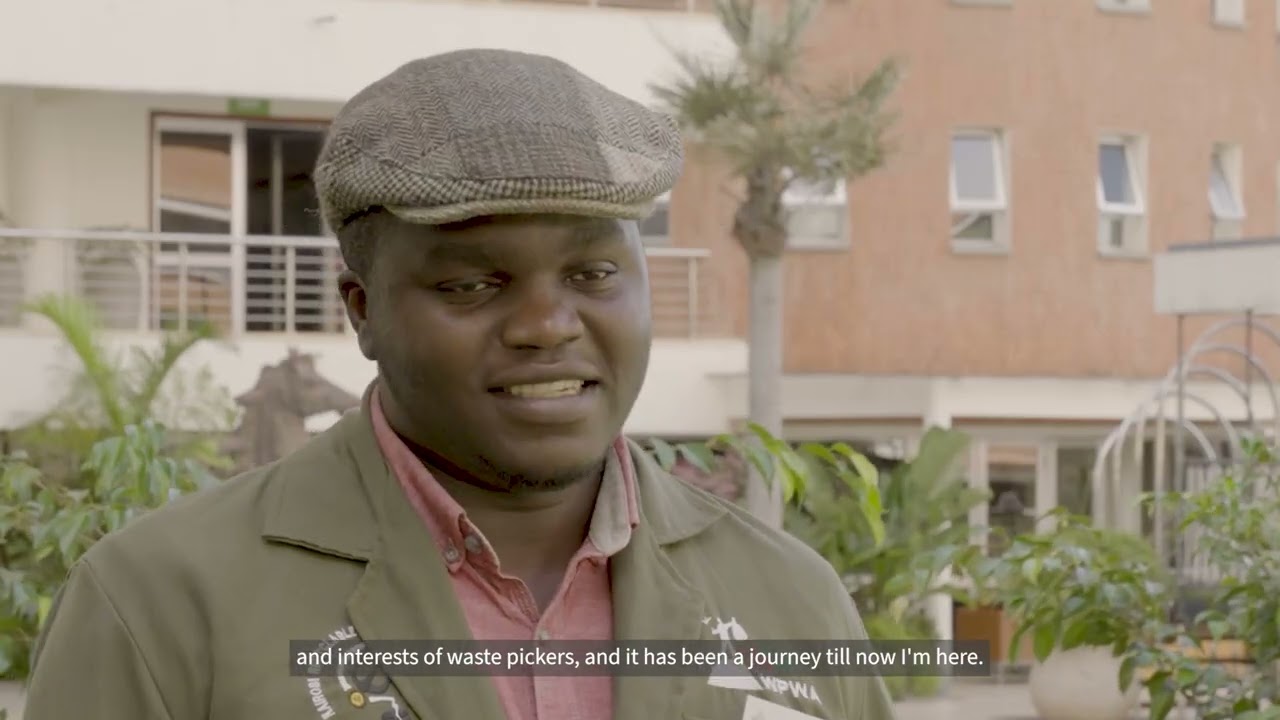
Brian began waste picking at age 9 when his mother gave him plastics to sell. What started as a way to earn money became a lifetime of organising, from collecting recyclables in Kibera to helping waste pickers speak for themselves nationally.
When Brian was 17, while still in school, he founded Slums Going Green and Clean. Later, with others, he formed the Kenya National Waste Pickers Welfare Association (KNWPWA) to fight for the rights and interests of waste pickers.
“Waste picking is dangerous,” he says. “It's dangerous because, first of all, you're not recognised. Second of all, there is no law in waste picking.”
He describes waste picking as work that anyone can enter, as long as they know what to collect. That openness provides income where few options exist, but it also leaves workers exposed. They handle unsorted waste and sharp materials, often without knowing what risks are hidden in the materials around them.
Open burning adds another layer. According to Lloyd’s Register Foundation’s World Risk Poll 2024, 54% of people in Kenya burn their waste, making it the country’s most common form of household waste disposal. Globally, around 41% of households either dump or burn waste. In Africa, an estimated 90% of waste is mismanaged.1
Brian connects open burning to other community issues: pollution in the air, chemicals in the body, and serious illness.
“There are no fences in the airspace,” he says. “So we share the airspace. So if someone is burning, even if it's a kilometre away, as long as the air will come and I breathe it, it will affect me.”
Engineering X describes open burning of waste as a global crisis. The practice releases harmful pollutants, including methane and black carbon, and contributes to respiratory, dermatological and developmental health problems. It also deepens inequality, with informal waste workers, women, children and people living near dumpsites among those most exposed.
“There are a lot of health hazards accompanied by waste picking,” Brian says. “I think open burning is a game-changer because there are a lot of chemicals in these plastics.”
The danger is made worse by a lack of information. Waste pickers and communities often cannot know what chemicals are present in the plastics and materials being burned.
“Most of the time, we don't know what's in the plastics,” Brian says. “So it's a health hazard, not only for me, but for everyone.”
He also speaks about the health conditions people may experience without connecting them to burning waste.
“There are some people who are complaining of asthma, TB, bronchitis, chest-related diseases.”
“We advocate for no burning because it not only affects me, it affects everyone,” Brian says. “It kills everything, the plants, the children, the domestic animals, the wildlife.”
Through Engineering X’s Open Burning of Waste initiative, Brian is one of the Open Burning Champions bringing community knowledge into a global effort to end unsafe waste burning.
Brian’s contribution is rooted in lived experience. He knows why households burn waste when no better option exists, and why waste pickers need recognition, not removal.
Engineering X was co-founded by Lloyd’s Register Foundation and the Royal Academy of Engineering to address major engineering challenges. Its Open Burning of Waste initiative works to create the conditions for change in behaviour, policy and practice through convening, advocacy, partnerships, grant funding and evidence generation.
Policy will work best when it includes the insight of informal workers who recover materials every day. The KNWPWA brings that knowledge into the discussions. It pushes for waste pickers to be included in waste management systems, protected from harm and treated as part of the solution.
Ending open burning will require better collection systems, safer recycling, stronger policy, producer responsibility and investment in communities. Brian also believes awareness has to reach households and individuals, so people understand the consequences of burning waste and can make different choices where alternatives are available.
“In order to end open burning, we need to raise awareness so that people can make informed decisions,” he says. “Because when every individual is responsible, we are sure no one will have an open burning somewhere.”
Brian’s story shows why waste pickers need to be part of decisions about cleaner cities, safer work and the circular economy. They are among the people most exposed to unsafe waste systems, but they also recover materials, reduce dumping and understand where change is most urgently needed.
Ending open burning and protecting the health of waste pickers have to go hand in hand. Through Engineering X’s Open Burning of Waste initiative, and the work of the KNWPWA, that shift is beginning to take shape in Kenya: raising awareness, strengthening recognition, and helping build safer waste systems from the communities most affected.
Cleaner air, safer work and stronger waste systems all depend on recognising the people already doing this work, and making sure they are listened to and protected as part of the solution.
In order to end open burning, we need to raise awareness so that people can make informed decisions. Because when every individual is responsible, we are sure no one will have an open burning somewhere.
Brian Gisore Nyabuti Chairman, Kenya National Waste Pickers Welfare Association
https://engineeringx.raeng.org.uk/programmes/safer-end-of-engineered-life/open-burning-of-waste/
Grant learnings and best practice outcomes from the open burning of waste grant projects with Engineering X.
In this post, representatives of an Engineering X-led consortium discussing the findings of the 2024 Waste Report, in order to better understand the issue of the open burning of waste.
Global consortium led by Engineering X wins over $1 million for project to stop open burning of waste.

