Behavioural insights for better waste management

This page is approximately a 3 minute read

This page was published on

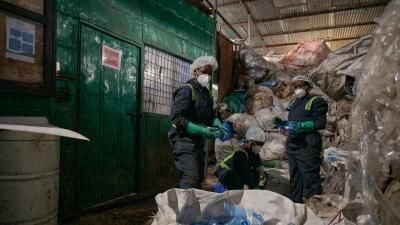
Workers in protective gear sorting plastic bottles at a recycling facility, surrounded by bags of materials.

Researchers from the UNEP International Environmental Technology Centre are using World Risk Poll data to better understand the relationship between local waste management services and communities’ disposal habits, ultimately informing a more effective and collaborative system for safe waste management. 

What problem is your project aiming to address?

Fast-urbanizing developing countries face critical challenges in municipal solid waste management. Not only are there the visible failures of service coverage and operational inefficiencies, there is also the need to deal with “behaviour gaps” that prevent effective community cooperation towards a better waste management system. 

We aim to bridge this gap between individual cooperation with the systems by comparing recent studies and historical trends on waste management systems related to waste disposal habits and regulatory frameworks. By challenging the assumption that the better the waste collection services locally offered, the better the community behaviour on waste disposal, this project will address where incentives should be focused, and how risk perception affects waste disposal habits. 

How are you going to go about this?

We will bridge this knowledge gap by identifying actionable insights into societal behaviour and municipal solid waste management, aiming to empower decision makers with key information for impactful interventions.

This will be done through desk research and comparative analysis of UNEP-IETC (International Environment Technology Centre)'s Global Waste Management Outlook (GWMO) and the World Risk Poll ‘A world of waste’ report, in addition to other relevant sources, to better understand the relationship between local waste management services and disposal habits. The final materials will inform targeted interventions designed to enhance public engagement and promote better waste management strategies, ultimately contributing to a cleaner and safer environment and improved community health. 

Who will this make safer, and how?

Better-informed decisions lead to a more effective and collaborative system for proper waste management. This in turn contributes to lower levels of waste pollution, with less risks for human and ecosystem health, and improved community safety. Targeted analysis on vulnerable groups, like women and informal workers, will contribute to a better understanding of waste disposal habits, exposure patterns and social vulnerability. 

How does the World Risk Poll data enable this project and what can you do with it that you couldn't otherwise?

We will use findings and insights from the World Risk Poll 2024 ‘A World of Waste’ report, in combination with data from UNEP’s Global Waste Management Outlook, to better understand the implications of the quality of local waste management services and infrastructure for communities’ disposal habits. These datasets will add quantitative and qualitative features, and allow us to identify key behavioural factors that influence waste disposal and recycling, and their implications for waste-related policies and strategies. 

Who do you want to talk to, to enhance the impact of this project?

At an early stage we aim to engage end-users like local authorities or waste operators, as well as key stakeholders like waste worker associations, informal workers, citizen networks and young people. This participatory, feedback-driven approach aims to make for a more effective and targeted analysis. We also seek to engage the community through identifying and working with ‘champion communities’, who are already doing good on waste disposal and cooperating with existing systems. 

We will share the project findings across the network of partners and waste management community, with the hope that the results will form actionable insights for better waste management and safer communities across the world. 

To find out more about this project, get in touch with the project team at felipe.dallorsoletta@un.org.