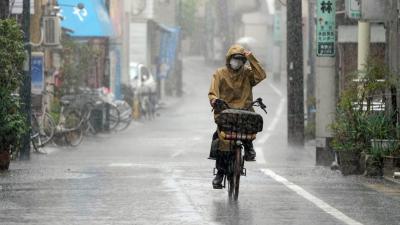
The findings come from the latest report from the Lloyd’s Register Foundation Work Risk Poll, powered by Gallup: ‘A Resilient World? Understanding vulnerability in a changing climate.’ The report presents data from over 125,000 people in 121 countries, revealing how people feel their communities and their country’s infrastructure and government can cope in the face of disasters.
According to the data – collected in 2021 – almost half (48%) of Japanese respondents believe their neighbours do not care about their wellbeing, a staggering 16 percentage-points below the world average (32%). At 20%, the proportion who have personally helped a stranger in the past month is also significantly below the worldwide average (32%) – making Japan the lowest-scoring country in the world on both indicators.
The above findings come in the context of official data that reported on the effects of loneliness in Japan, including a rapid rise in suicides since the onset of Covid-19. Japan has since appointed its first cabinet minister devoted to policies addressing high levels of social isolation.
The Poll also found that 51% of respondents felt that their government did not care about their wellbeing ‘at all’, which is significantly higher than the worldwide average of 37%.
In contrast, Japanese respondents displayed strength in individual resilience (one of the Poll’s four aspects to calculate the overall Resilience Index), with a score of 0.63, almost 40% higher than the world average (0.46), as well as household resilience (0.64 for Japanese respondents, while the world average sits at 0.54). Individual resilience was calculated by analysing two survey items, which measure agency, self-efficacy and educational attainment, while household resilience highlights financial assets, planning and access to communications.