New technologies to improve health and safety performance
Discovering Safety joins forces with Safetytech Accelerator to build a Smarter Regulation Sandbox.
This page is approximately a 4 minute read
This page was published on
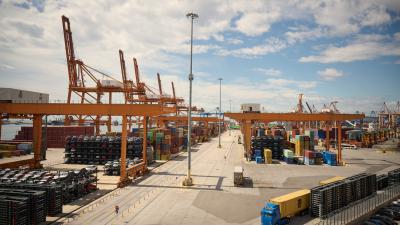
Led by the National Technical University of Athens (NTUA) and funded by Lloyd’s Register Foundation, the AEGIS project aims to support and widen the safe adoption of Onshore Power Supply (OPS) — the practice that allows a docked ship to draw electrical power from environmentally sustainable shore-based systems, rather than running its own diesel engines while at berth. OPS is sometimes referred to informally as ‘cold ironing’ in industry usage.
This strategic project establishes a comprehensive research and validation framework to address the challenges that arise when ships are connected to Onshore Power Supply systems at berth. It focuses on advancing corrosion prevention and ensuring the long-term structural integrity of maritime assets, while further solidifying the high electrical safety standards already associated with shore-side connections.
“The AEGIS project brings together NTUA’s complementary expertise in marine engineering, electrical engineering and materials science, alongside a high-level coalition of international organisations and leading professional and standardisation bodies. AMPP, IMarEST and IEEE contribute their expertise to support the effective implementation of the project. AEGIS is designed to generate the scientific evidence required to enable the safe and optimised deployment of shore power worldwide.”
“Onshore Power Supply is absolutely vital for the decarbonisation of our ports and has rightly taken centre stage in our industry’s environmental strategy. However, the complex phenomena that can occur during ship and port connection are often left unspoken and are not yet properly managed. Through AEGIS, the consortium is bringing together some of the world’s leading engineering voices to change that. Our goal is to ensure that as shipping moves towards electrification, these systems are deployed reliably and at scale, protecting both critical infrastructure and the people who operate them.”
— Prof. John Prousalidis, Project Coordinator, National Technical University of Athens
By resolving one of the final technical hurdles to OPS technology, the project is cementing shore power as a secure, long-term vehicle for port decarbonization while fostering global confidence in green technologies. The scientific outputs of the project—on-site validated models and advanced protection methods—will be paired with a deep commitment to capacity building, delivered through specialized training programmes. AEGIS will thus ensure that the global maritime workforce is fully prepared to manage the infrastructure of the future, safeguarding both human life and high-value maritime assets.
“A cleaner, lower carbon and more efficient shipping industry ultimately benefits us all. Environmentally sustainable shore-based power systems are a vital pathway to achieving these goals. Our partnership with NTUA on the AEGIS project is helping develop reliable, evidence-based tools and techniques to safely scale Onshore Power Supply practices, reducing use of fossil fuels and supporting port ecosystems as drivers of the regenerative ocean economy.”
— Jan Przydatek, Director of Technologies, Lloyd’s Register Foundation
Having officially commenced in November 2025, the AEGIS project is already gathering data and vital operational insights. Port authorities, ship operators, and technology providers are invited to engage with the consortium to nurture a broader industry dialogue and ensure the project's results reflect the needs of the entire sector’s stakeholders. In the coming months, a dedicated digital platform will be launched to document the project’s journey and provide access to its public material, safety guidelines, and training resources.
Discovering Safety joins forces with Safetytech Accelerator to build a Smarter Regulation Sandbox.
A major step forward for ocean sustainability will be launched at the United Nations Ocean Conference 2025: a global network of Ocean Centres designed to put safety at the heart of the blue economy transition in emerging ocean economies.
The International Fund for Fishing Safety, has committed funding totaling £220,000 to support six fishing safety projects.

