Using the World Risk Poll to strengthen localised early warning systems in Ethiopia and Nepal

This page is approximately a 5 minute read

This page was published on

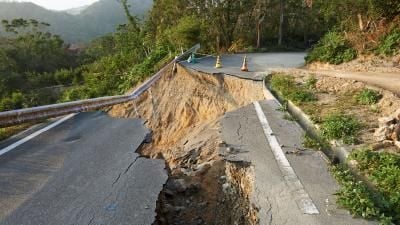
Collapsed mountain road with severe landslide damage, traffic cones warning of hazard.

Page author

A person with auburn hair wearing a black scarf and light-coloured top, smiling against a green leafy background.

Shivangi Chavdaa, Head of Programmes, GNDR

With over two decades of dedicated experience in the field, Shivangi serves as the Head of Programmes at the Global Network of Civil Society Organisations for Disaster Reduction (GNDR). Her journey has been marked by significant contributions to humanitarian efforts worldwide.

Community-led Landslide Resilience

The Global Network of Civil Society Organisations for Disaster Reduction (GNDR) will use World Risk Poll data to help identify those most endangered by severe weather and aim to improve their access to early warnings.   

What problem is your project aiming to address?

Early warning systems are tools and networks that give people advance notice of disasters - like landslides, floods, or storms - so they can prepare, evacuate, and protect their homes and lives. In Nepal and Ethiopia, these systems are critically lacking, leaving many rural and marginalised communities at high risk. 

In Nepal, landslides are becoming more frequent due to heavy rains, melting glaciers, and earthquakes. Many communities live in remote, mountainous areas where warnings rarely reach them, and local knowledge is often not included in official alerts. 

In Ethiopia, deforestation, farming on steep slopes, and extreme weather increase landslide and flood risks. Existing early warning systems are often top-down, poorly coordinated, and difficult to access in areas with limited mobile coverage. 

These gaps put millions of people at risk of loss of life, property damage, and disrupted livelihoods from hazards that could be better anticipated. Our project is addressing these gaps by focusing on the communities who are most exposed and least able to access timely, understandable alerts. 

How are you going to go about this?

We will address this problem by working closely with communities in Nepal and Ethiopia to understand why early warnings are not reaching them and to design systems that people can trust and use. Our approach starts with listening. Using World Risk Poll data alongside local research, we will identify communities in both countries that are most exposed to landslides and most excluded from existing early warning systems.

The work will be delivered by GNDR members with local expertise: the National Society for Earthquake Technology (NSET) in Nepal and Light for Generation in Ethiopia. They will work with communities to understand how people experience risk, what prevents them from acting on warnings, and what local knowledge already exists.

Rather than introducing one-size-fits-all solutions, NSET and Light for Generation will co-create early warning systems with communities, local authorities, and civil society organisations. Communities will play a central role in testing, refining, and managing the systems, building trust and local ownership for long-term sustainability. 

Who will this make safer, and how?

This project will make rural and marginalised communities in landslide-prone areas of Nepal and Ethiopia safer - especially families who currently live with constant risk but little or no warning. These include low-income households, women, older people, people with disabilities, and communities in remote areas where access to information and support is limited.

By improving access to timely and trusted early warnings, the project will give people valuable time to act before disaster strikes. Families will be better able to move to safer places, protect their homes and livelihoods, and support neighbours who may need help. Because warning systems are designed and run with communities themselves, they will use familiar languages, communication channels, and local knowledge, making alerts easier to understand and act on.

Delivered by trusted local organisations in Nepal and Ethiopia, the project will also strengthen coordination between communities, local authorities, and civil society. Over time, this will reduce avoidable loss of life and damage, ease fear and uncertainty, and help communities face future hazards with greater safety, confidence, and control. 

How does the World Risk Poll data enable this project and what can you do with it that you couldn't otherwise?

The World Risk Poll 2024 provides the data that makes our project possible by showing which communities are most at risk from landslides in Nepal and Ethiopia, and why they often miss early warnings. Using the Poll data, we can pinpoint high-risk areas based on landslide exposure, access to alerts, and socio-economic factors like poverty and technology access - information we couldn’t identify as precisely otherwise.

World Risk Poll data also highlights barriers to receiving warnings. For example, it shows that 50% of people affected by landslides worldwide in the past five years did not get early warnings, and that factors like low digital literacy, lack of trust in official alerts, and poor mobile or radio coverage prevent effective action. This allows us to design interventions tailored to each community, combining local knowledge with technology and alternative communication methods.

Without this data, our project would be less targeted, less evidence-based, and risk missing the communities that need warnings most. 

Who do you want to talk to, to enhance the impact of this project?

Through this project, we aim to work with everyone who plays a key role in making early warning systems work at the local level. This includes at-risk communities, local civil society organisations, and local and national government officials who play a central role in planning, decision-making, and response.

The project’s implementing partners and communities will work together to make sure early warning systems reflect local realities and are trusted by the people who rely on them. At the same time, we will engage with the organisations that play important roles in making early warning systems work in practice. This includes national and local meteorological agencies, mobile network operators, and other service providers in both countries. These collaborations will help ensure that alerts do not stop at national systems but reach the last mile - enabling people to take timely action and reduce harm when landslides occur.