

Unlocking safe blue growth in the Philippines
In this blog, Yrhen Balinis, Country Lead for our Ocean Centre in the Philippines, explains why collective, local action is key to driving change in the region.
This page is approximately a 3 minute read
This page was published on
Dr Randhi Satria, Country Lead of Ocean Centres Indonesia
You can fit the latest navigation kit, optimise routes, and promise faster voyages but if the hull isn’t sound, the ship isn’t ready to go to sea.
In the same way, many strategies for a sustainable ocean economy rest on an unspoken assumption that safety is already embedded in the system. From there, it becomes logical to talk about growth, decarbonisation, innovation, and investment. But if vessels operate under pressure, if workers face preventable risks, or if reporting systems fail to capture reality, then the foundation is faulty. The conclusions may look convincing, but they will not hold.
In conversations about the ocean economy, we often talk about growth, decarbonisation, innovation, and investment. But fundamentally, progress cannot be built on unsafe systems. When vessels operate under pressure, when workers face preventable risks, or when reporting systems fail to capture real incidents, the cost is not only human it is economic and structural. Safety is not just about compliance; it is about resilience.
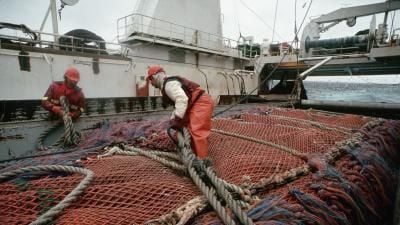
I recently watched Lloyd’s Register Foundation's new film, “All that separates us is distance.” The film explores the lives of what seems like three very different fishers in Ghana, Indonesia and the UK. What becomes evident by the end of the film is that they aren’t so very different after all.
What I appreciated most about this video is its recognition that safety is a shared responsibility. Maritime challenges are rarely isolated. They sit at the intersection of regulation, business practice, workforce capability, infrastructure, and culture. Addressing them requires more than rules - it requires collaboration, transparency, and a willingness to learn across sectors.
For countries with strong maritime exposure, embedding safety into sustainability strategies is both pragmatic and principled. Protecting seafarers, fishers, and port workers is not separate from economic ambition – it actually enables it. A safe ocean economy is a more competitive, investable, and future‑ready one.
But this requires us to be honest about our starting point. We can build coherent strategies, persuasive business cases, and ambitious policy frameworks but if they rest on the assumption that safety is already taken care of, the logic that follows is unreliable. If we are serious about building a sustainable ocean economy, then safety must sit at the foundation of how we design policy, structure investment, and lead organisations not as an afterthought, but as a first principle.
In this blog, Yrhen Balinis, Country Lead for our Ocean Centre in the Philippines, explains why collective, local action is key to driving change in the region.
In recognition of World Maritime Day 2025, we are celebrating our Ocean Centres, launched in partnership with the UN Global Compact, and designed to put safety at the heart of the blue economy transition in emerging ocean economies.
A major step forward for ocean sustainability will be launched at the United Nations Ocean Conference 2025: a global network of Ocean Centres designed to put safety at the heart of the blue economy transition in emerging ocean economies.

