
A year of progress: Seoul’s Future Ship Safety Centre delivers global impact
Celebrating a year of progress for the Lloyd’s Register Foundation Centre for the Safety of Future Ship at Seoul National University.
This page is approximately a 5 minute read
Shipping is adapting to decarbonisation, alternative fuels and rapid technological shifts. At the same time, climate change is driving more extreme and unpredictable weather. For crews, passengers and coastal communities, these pressures create new safety challenges. Future ships must evolve, and so must the evidence, skills and standards that keep people safe.
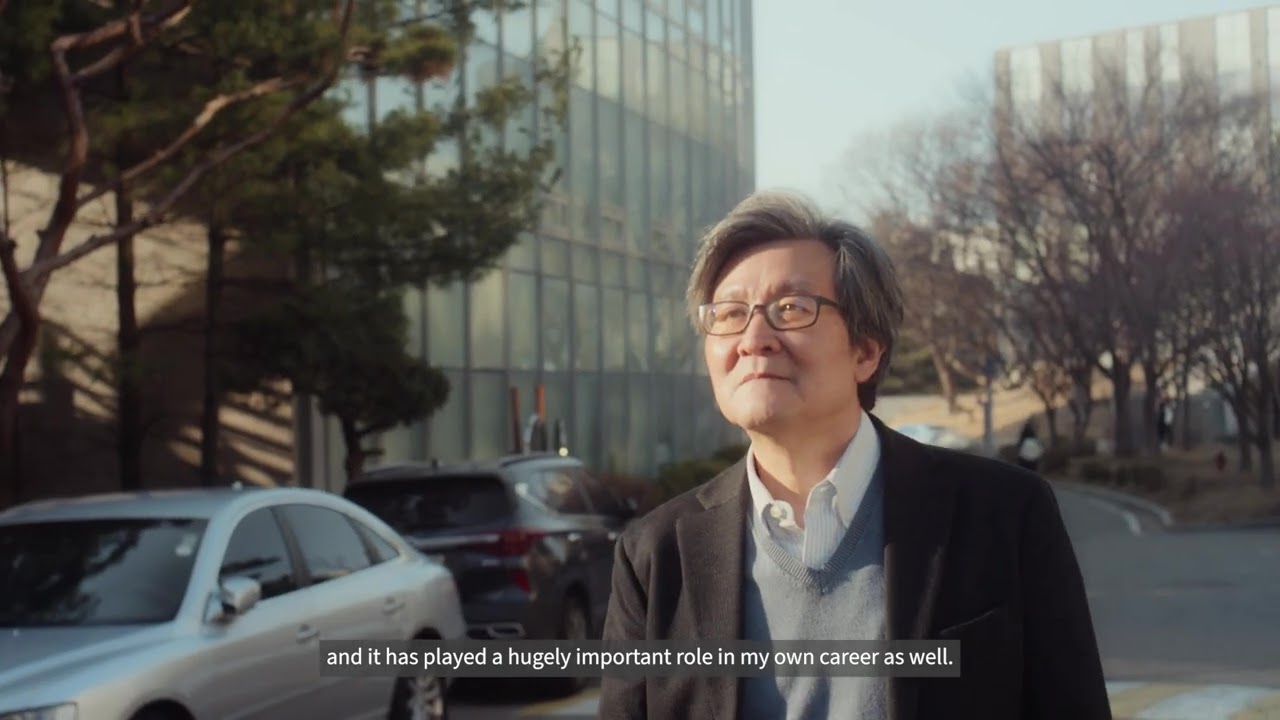
At Seoul National University, the Lloyd’s Register Foundation Research Center for Safety of Future Ship is working to close critical evidence gaps and support safer operations at sea. Led by Professor Yonghwan Kim, the Centre focuses on three urgent areas: improving fuel tank design and systems for alternative fuels, predicting and preventing risks such as dynamic instability and loss of manoeuvrability in waves, and applying digital techniques to enhance maritime safety.
The future of maritime safety also depends on the students, researchers and engineers who will carry this work forward, including young women entering a field where they have historically been underrepresented.
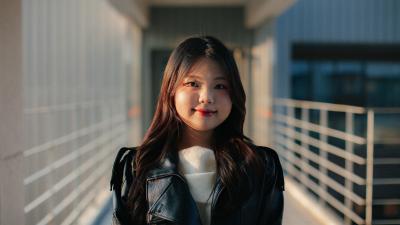
SeoYeon Youn, a student at Seoul National University, is part of that next generation. Through her studies, an international exchange programme and the ‘Women in Engineering’ initiative, she is building the confidence, experience and ambition to contribute to a safer maritime future.
Here, SeoYeon reflects on why she chose engineering, what safety means in her field, and the impact she hopes to have.
Growing up in a household of educators, I developed a deep affinity for mathematics early on. This foundation naturally led me toward STEM. Attending a specialised science high school fostered my curiosity, and from there, I was drawn to engineering; an ideal path where math, innovation, and problem-solving meet. Ultimately, I chose engineering because it allows me to apply my strengths to real-world challenges.
As a student of the Department of Naval Architecture and Ocean Engineering, I initially thought my focus would simply be on ship design. But as I delved deeper, I realised that maritime engineering is fundamentally about safeguarding human lives at sea. Whether it’s designing more stable vessels, enhancing evacuation systems, or implementing safety protocols, I’ve seen firsthand that every engineering decision impacts safety. Knowing that my field directly protects people, whether during storms or emergencies, has shown me the profound role engineering plays in both protecting and saving lives.
What I love most about my course is how uniquely tied it is to human history. Shipbuilding is ancient, yet still vital today. That sense of legacy inspired me. After the maritime training internship at Lloyd’s Register, I set my sights on a career in the global maritime sector. That motivation pushed me to excel, and I’m proud of how my focus translated into real results, such as satisfying grades. It reinforced my dedication to both the field and my future.
While I’m just beginning my involvement in Women in Engineering initiatives, I already see how crucial they are. Women are still underrepresented, and these spaces create opportunities to change that. I’m inspired to be part of this shift, and in the future, I hope to be a leading example, showing just how impactful women can be in engineering. I’m excited to contribute to an inclusive environment and show that women aren’t just participants, we’re drivers of progress.
South Korea is evolving, but our traditional culture has meant that women in engineering have often been underrepresented. More female engineers will bring diverse perspectives and foster a more balanced, inclusive innovation culture. I’m a firm believer in equality, and this isn’t about ‘us versus them’, it’s about creating a stronger, more creative engineering future for everyone.
I see myself contributing to engineering. If I reach a point where I’m recognised globally, I want to use that platform to inspire young girls who aspire to join the field. I’d love to be a mentor, a role model, and a supporter for the next generation, helping them passionately achieve their dreams, sharing my story and encouraging them to chase their dreams. That’s the impact I’d love to have.
Today, the Research Center is building knowledge for future ships and training the people who will help design them. Its work connects laboratory research, global collaboration and practical safety challenges. For Lloyd’s Register Foundation, supporting the Center means investing in the evidence and skills needed to protect lives at sea.
SeoYeon speaks about mathematics, innovation and shipbuilding, but also about evacuation systems and saving lives. She sees engineering as both a technical discipline and a way to protect people.
The future of shipping will be shaped by new fuels, technologies and risks. It will also be shaped by young engineers with the curiosity to solve problems, the confidence to lead, and the conviction that every design decision can affect someone’s safety.
SeoYeon is still early in her career, but her ambition is understandably great. She wants to become a successful engineer and then use that platform to help other women follow. In a field where women have too often been underrepresented, that aspiration is part of the safety story too.
Our goal is simple: to understand the risks facing vessels clearly, to predict those risks, and to research how we can prevent accidents before they happen.
Yonghwan Kim Director, Lloyd's Register Foundation Research Center for Safety of Future Ship, Seoul National University
Celebrating a year of progress for the Lloyd’s Register Foundation Centre for the Safety of Future Ship at Seoul National University.
Lloyd’s Register Foundation grants £4M to Seoul National University for research to enhance maritime safety and address global challenges.
Professor Yonghwan Kim, Director of the Lloyd's Register Foundation Research Center for Safety of Future Ship at Seoul National University examines how striving to harness the vast potential of the ocean must be done in parallel with protecting those whose livelihood depends on them.

