From Risk Data to Resilient Action: Prioritising City Investments for Impact

This page is approximately a 4 minute read

This page was published on

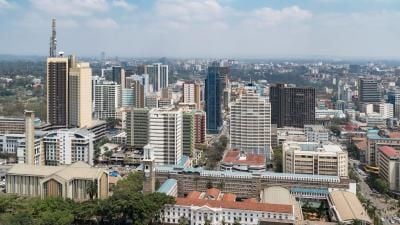
Aerial view of Nairobi city skyline with modern skyscrapers and historic buildings under blue sky.

Page author

A person with long curly hair in a beige coat smiling outdoors with city buildings in the background.

Fitsum Gelaye , Head of Engagement, Africa, Resilient Cities Network

Page author

A person with glasses and beard smiling on a rooftop with city skyline in the background.

Javier Garduño , Head of Engagement, Latin America, Resilient Cities Network

Page author

Person with curly dark hair and glasses wearing a white and green outfit against a mint green background.

Nicole Ponce , Associate Knowledge and Communications, Resilient Cities Network

The Resilient Cities Network are partnering with Arup to use World Risk Poll data to enhance how cities assess environmental, social and economic risks, improve decision making and target investments. They will link these insights to proven resilience approaches, ultimately supporting cities to institutionalise risk-aware governance.  

What problem is your project aiming to address?

While many cities have strategies in place to respond to risk, today’s challenges driven by climate change, economic insecurity, inequality and infrastructure gaps are compounding faster than existing approaches can adapt. Insights from the World Risk Poll reinforce what we hear on the ground: in many low- and middle-income cities, communities often do not see climate change as an immediate threat and feel they have limited agency, even where physical vulnerability is high. This highlights a growing gap between how risks are planned for and how they are experienced by communities on the ground.

As a result, planning often relies on outdated technical data and long-term frameworks, meaning community perspectives are not consistently integrated into decision-making and resilience investments are not always aligned with the risks people face.

Through the ‘From Risk Data to Resilient Action’ project, we are working with Lagos, Nigeria, and Salvador, Brazil – two cities that face severe environmental and social risks – to address this gap by bringing together community perceptions, updated risk evidence and foresight analysis. Without this integration, cities risk planning for yesterday’s problems rather than preparing for tomorrow’s realities. 

How are you going to go about this?

Our project works with cities to turn risk data into action by strengthening urban resilience through data-driven, community-centred approaches that prioritise investments to protect the most vulnerable. Working alongside Lagos and Salvador, we integrate World Risk Poll insights into existing resilience frameworks to strengthen risk governance, improve risk assessment and decision-making, and better target on-the-ground interventions. Through close engagement with stakeholders, data validation, and the development of an investment prioritisation methodology, our team supports cities in embedding risk-aware governance into everyday planning while developing a scalable and replicable model for urban resilience globally. Finally, we generate practical tools and learning resources that can be adapted by cities across the Resilient Cities Network and beyond. 

Who will this make safer, and how?

Our project ultimately helps make communities – especially those most exposed to environmental risk such as floods, heat and coastal erosion – safer by strengthening the governance, planning, and decision-making processes that shape how cities manage risk. We are supporting cities to adopt data-driven, community-centred urban resilience approaches that integrate lived experience with available risk data, ensuring resilience strategies respond to both current reality and emerging future challenges.

We also aim to strengthen evidence-based decision-making by equipping city teams with practical tools and foresight methodologies to better anticipate emerging risks. By building long-term institutional capacity within city resilience teams and sharing lessons through the Resilient Cities Network, our project enables other cities to adapt these approaches, helping protect vulnerable populations well beyond the initial focus cities. 

How does the World Risk Poll data enable this project and what can you do with it that you couldn't otherwise?

Our project will review World Risk Poll data to identify gaps in how environmental, social and economic risks are currently understood by cities and link these insights to proven resilience approaches that cities have used over time. In Lagos and Salvador, we will combine World Risk Poll findings with local data to compare community risk perceptions with evidence on how risks are being addressed, helping to reveal areas of misalignment. Building on this, our team will explore future risk scenarios and bring city stakeholders together to prioritise actions and investments that respond to local realities, especially amid rising and compounding challenges. By using the World Risk Poll as a starting point, we support cities in moving from identifying risks to taking practical action, strengthening their ability to manage uncertainty and protect people more effectively. 

Who do you want to talk to, to enhance the impact of this project?

We want to engage and work directly with a wide range of stakeholders at both the city and global levels. Our team will work closely with community members to ensure their lived experiences, perceptions of risk and priorities shape how resilience approaches and investment decisions are developed. We will also engage city teams across different departments and sectoral offices, alongside local experts, to align resilience planning with on-the-ground realities and validate priorities across climate, infrastructure, social and economic risks.

Beyond the pilot cities, we aim to engage the wider Resilient Cities Network, global urban practitioners and subject-matter experts to share lessons, test assumptions and refine the methodologies developed through our work. These global conversations will help strengthen risk-informed, community-centred investment prioritisation and support the adaptation and uptake of these approaches by other cities facing similar challenges.

To find out more about this project, get in touch with the project team at fgelaye@resilientcitiesnetwork.org. 

Team: Resilient Cities Network 
  • Lina Liakou, Global Director of City Engagement & Practice
  • Fitsum Gelaye, Head of Engagement, Africa
  • Javier Garduño, Head of Engagement, Latin America 
  • Nicole Ponce, Associate, Knowledge and Communications, Resilient Cities Network
Arup
  • Xavier Aldea Borruel, Senior Sustainability Professional
  • Jose Ahumada, Senior Consultant, Cities, International, Development