
New technologies to improve health and safety performance
Discovering Safety joins forces with Safetytech Accelerator to build a Smarter Regulation Sandbox.
This page is approximately a 4 minute read
This page was published on
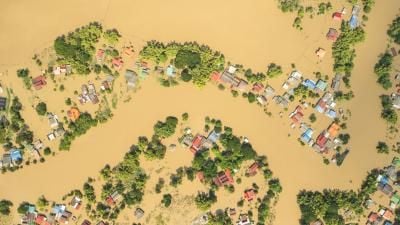
The proportion of people around the world who regard climate change as a ‘very’ or ‘somewhat’ serious threat to people in their country has risen to three-quarters (75%) for the first time, a global study has found.
The findings come from a new report from the latest edition of the World Risk Poll, for which global analytics company Gallup interviewed 143,000 people in 140 countries during 2025, using rigorous representative sampling techniques.
75% is the highest level of global public concern recorded by the Poll since it began in 2019, when the figure stood at just under seven in 10 (69%). This increase is being driven by people in middle-income countries, who are increasingly feeling the heat of record temperatures, and more frequent and intense severe weather events.
However, the global rise masks a reduction in the intensity of concern in many high income countries, where the proportion of adults who see climate change as a ‘very serious’ threat has dropped from over half (54%) to just under (49% – still above the 40% global average). Eight high-income countries – Kuwait, Croatia, Spain, Ireland, Denmark, Canada, New Zealand and the UK – have seen declines of at least 10 percentage points.
The findings come as climate campaigners, policymakers and industry leaders from around the world convene for London Climate Action Week, in a year on-track to be among the warmest on record, boosted by the impending El Niño weather pattern.
Nancy Hey, Director of Evidence and Insight at Lloyd’s Register Foundation, said: “Three quarters of people worldwide now see climate change as a serious threat – the highest we’ve ever recorded – and fewer people now say they don’t know if it will affect them. This is a clear foundation for action; action that can improve lives now and in the future. When we recognise our shared concern, we can move faster, together, for real, practical change.”
Despite the fall at the most intense levels of concern, four in five people (79%) in high income countries still regard climate change as at least a ‘somewhat serious’ threat to people in their country.
However, data from the World Risk Poll suggests that people in these countries seriously underestimate their fellow citizens’ level of concern – while half (49%) see climate change as a ‘very serious’ threat, only one in five (20%) believe most other people in their country feel the same. This gap is biggest in Portugal (42 percentage points) and the United States (41).
Pedro Conceição, Director of the Human Development Report Office at the United Nations Development Programme – which supported the development of the Poll – said: “The findings of the World Risk Poll reveal a powerful but often overlooked barrier to climate action: across the world, people care more about climate change than they believe others do. This perception gap matters. When people who support climate action think they are in the minority, they may be less likely to speak up, act, or support visible policy change – weakening the collective action that is urgently needed.
“We are pleased that our collaboration with Lloyd’s Register Foundation brings new evidence to this critical global challenge, showing that the space for climate action may be larger than many assume.”
Gareth Redmond-King, Head of the International Programme at the UK-based Energy and Climate Intelligence Unit, added: “As impacts from climate change worsen, people everywhere are worried about the growing dangers, and daily cope with the rising costs.
“Here in the UK concern about climate change bridges political, generational, and geographical divides – even if too many people wrongly believe their worries are only shared by a minority. Only cutting our emissions to net zero will halt climate change, and we are running out of time to limit the threat it poses to lives, livelihoods, health, and food security. The more everyone talks about that, the more people will realise their concerns are shared by almost everyone around them. And as climate change driven extremes are exacerbated by the arrival of El Niño, the more it will then become clear to leaders that the people who elect them expect them to act.”
The report – Alone Together: The Hidden Consensus on Climate Change – accompanies a second 2026 World Risk Poll report: The Quiet Hazards: How Everyday Risk Shapes Daily Life, which tracks global worry about, and harm from, a range of different safety risks. Headline findings include:
Discovering Safety joins forces with Safetytech Accelerator to build a Smarter Regulation Sandbox.
Professor Milena Nikolova from the University of Groningen is using World Risk Poll data to analyse how changing technologies affect safety in the workplace across different industries and countries, informing more targeted safety interventions.
Rewriting Women into Maritime makes London International Shipping Week debut.

