SAFER SA: Strengthening Access to Forecasts for Early Response in South Africa
This page is approximately a 4 minute read
This page was published on
Page author
Anna Steynor, UK Met Office
Page author
Joseph Daron, UK Met Office
Page author
Ailish Craig, University of Bristol
Page author
Nick Kroese, South African Weather Service
Page author
Lelam Zwedala, South African Weather Service
The South African Weather Service are working in partnership with the UK Met Office and the University of Bristol to use data from the World Risk Poll to improve how disaster warnings are disseminated. They aim to use lessons learned to improve systems across southern Africa.
What problem is your project aiming to address?
World Risk Poll data indicates people worldwide who are in the second lowest income group within their countries have poor access to weather and climate information to support their decision-making in the face of severe weather events.
This group is recorded as having only 45% exposure to weather information, compared to more than 60% in the poorest and more affluent groups in the Poll – an anomaly perhaps due to customised projects by funding agencies for the poorest category, and the affluent sections of the community’s access to digital media.
The problem that this project is addressing is the improvement of communication efficiency at all levels, through multiple channels, with a focus on addressing the anomaly present in the second lowest income category. Exposing all levels of the community to useful weather and climate information remains a complex challenge, and any improvement in the efficiency of dissemination will have a positive impact on safety across all community groups.
How are you going to go about this?
The SAFER SA project will build on existing work within the target communities to address the access challenges to early warning information by:
- Identifying the second lowest income group in the communities.
- Identifying community champions who will act as trusted intermediaries throughout the project.
- Design and develop solutions through sustained collaboration.
- Draft a communication plan to improve the dissemination of information within the target communities and beyond.
Training and awareness raising with the target communities will be essential, both to better understand the risks these groups are exposed to, and how information can be packaged and disseminated to promote action.
Who will this make safer, and how?
The system to improve the communication of weather and climate information will benefit all levels of society, particularly those in the second lowest income category.
The use of digital technology customised for disaster risk reduction and early warning will be implemented, and prototype platforms will be developed from this. These might include activities such as broadcasting information in local languages through local and regional radio stations, and via mobile phone platforms. The latter would use similar communication protocols for mobile phone service providers across South Africa that are already in place in the global north. This system uses networks to 'push' early warning messages to location-specific areas in danger of severe weather events. Work has already begun to engage the Department of Communication and the Independent Communications Authority of South Africa to negotiate the implementation of this service.
How does the World Risk Poll data enable this project and what can you do with it that you couldn't otherwise?
The World Risk Poll data provides a treasure trove of opportunities for researchers involved in the science of operational weather and climate services as well as the social science field to refine and focus on specific areas where gaps are identified in the quest to improve the resilience of risk prone communities.
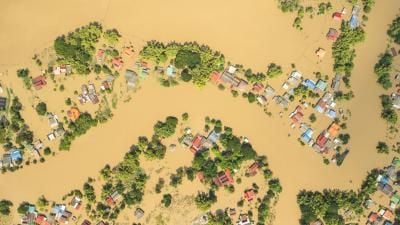
As recently as January 2026, South Africa suffered severe and damaging floods after heavy rainfall over the north-eastern parts of the country, including the Vhembe district municipality in the Limpopo Province, one of the target communities in the SAFER SA project. The government declared a state of emergency over the affected areas.
The information from the World Risk Poll, and the resulting SAFER SA project, will allow the tailoring of early warning systems, enhancing equitable access across all communities, with the aim of reducing the impact of similar events in the future.
Who do you want to talk to, to enhance the impact of this project?
The project team would like to talk to community members categorised as part of the second lowest income category (target audience) in the Limpopo, Free State, and KwaZulu Natal Provinces in South Africa. The success of the project will depend on several factors including:
- Co-designing and co-producing accurate and relevant products, which can be trusted by the communities using them.
- Building trust in the dissemination platforms, to improve uptake of the products and services.
- Training on weather and climate warnings to raise awareness and distribute knowledge.
Taking the above into account, it is clear that while emphasis will be on the target communities, the breadth of the communication work will benefit all levels within the communities.
Explore our other World Risk Poll into Action funded projects
Announced in 2026, these projects have been awarded funding by Lloyd’ Register Foundation to use data from the 2024 World Risk Poll to improve safety around the world, following the announcement of four projects earlier in 2025.
Read more